“I don’t think I’ve ever played a solo drum show.” -Jim White, one of the most revered indie-rock drummers ever
—
Jim White, he of the Dirty Three, and Nick Cave and Cat Power collaborative note, is perhaps the most quintessential music mensch in the last 30 years. (An extremely critical point: White was never a member of the Bad Seeds, despite his affiliations with Cave.) To say that the drummer and percussionist is well respected is to say that PJ Harvey, another icon who has tapped White, can be a bit shy or antisocial at times. Other White collaborators include Mark Kozelek, Courtney Barnett, Kurt Vile, Smog, Bonnie Prince Billy, Nina Nastasia … we could easily use up the word count for this article if we were to list all the musicians with whom White has rubbed elbows in studios and on stages.
But here’s what’s even more remarkable than all the facts spelled out above: During his impressively long career, White has never released an album of his own material until now. We went into our interview with him thinking that masochism or a complete and utter lack of self-respect and self-worth must be at the root of that bizarre wrinkle in White’s resume. But what we found instead was something that lessened our cynicism and upped our hope for humankind, if only just a little, and if only for a temporary period of time: Jim White is, simply put, a really good guy who appears to have determined that his purpose in life is to help others and serve where he believes he can be most useful.
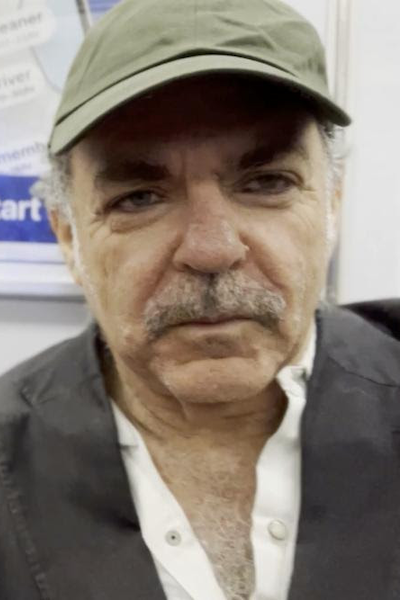
What do Cat Power, Nick Cave, PJ Harvey, Stephen Malkmus, Marianne Faithfull, Phosphorescent, Warren Ellis, Mark Kozelek, Bonnie “Prince” Billy, Courtney Barnett, Mick Turner, Kurt Vile, Joan as Police Woman, Smog, Nina Nastasia, Matt Sweeney, Martha Wainwright, Simon Joyner, Xylouris White, Joan Jett, New Buffalo, and Kurt Vile have in common? The answer is the gentleman pictured above: Jim White, arguably the most sought-after drummer in the history of underground music.
Best known for incepting Dirty Three some 33 years ago with fellow Aussies Ellis (violin) and Turner (guitar), White is no less in demand now – at the ripe age of 63 – than at practically any other point in his illustrious career. And now, at very long last (more than three decades), the kit master is finally issuing his own records along with producer Guy Picciotto of Fugazi.
Mystifying as it may sound, the world experienced Oneness in 2024. Every continent, every country—maybe even every city, town, village and hamlet—was touched by horror, strife and grief. Discord descended upon humankind in the form of social and political upheaval, sometimes bloody but always divisive and grievous, and also, lest it even need be said anymore, devastating climate change that continues to increase at any accelerating pace. Earth became united in the universally shared experience of disunity, leaving billions of us not knowing where to turn, in some cases figuratively, in some cases literally, and in some cases both.
Most of us did not and still do not know where to turn for answers, meaning or at least a sense of solidarity or even community, simple as it is to create and simple as it should be to come by. Underlying this sense of existential angst is not only a feeling of futility due to the sheer scale of the crises we face but a subconscious masochism that we deserve punishment because, of course and as always, we are responsible for the causes of our problems. Unchecked and unregulated advances in technology, climate change denialism, and the decline—and even contempt—for education, science and, most incredulously, facts, have led us to where we are today.
Naturally—and that word should be considered truly, because it’s becoming increasingly apparent that this does appear to be intrinsic in human nature—we consciously chose, collectively, as human beings have done since time immemorial, to avoid doing the hard work of cooperating with each other to address and try to solve the quite possibly solvable problems. Instead we succumbed, once again, as if violently sticking our middle finger directly in the eye of the theory of evolution, to give into our basest and most primal impulses, by validating and strengthening hate groups, embracing and spreading conspiracy theories, and basking in the comfort of inaction.
Those of us who didn’t want to go along with that sick and twisted ride felt like we had nowhere to turn, as the institutions that we often cling to in times like these became corroded, minimized and even destroyed by the aforementioned malignant reactionaries who seized public discourse and brutally bullied those who didn’t agree with them into submission. But amid the nonstop pummeling of crushing news updates on the apocalyptic state of affairs globally, nationally and even in our own neighborhoods, some of us remembered that, as responsible as humans are for the evils of the world, we are also capable of producing that which is good, that which represents us in forms that actually appear to be beyond what we as humans have the capacity to conceive or fathom, even though we inevitably rise to the occasion and do create it in the end. And that is art.
***
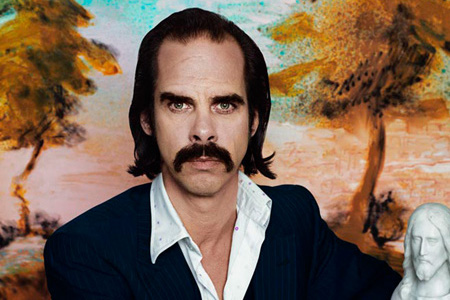
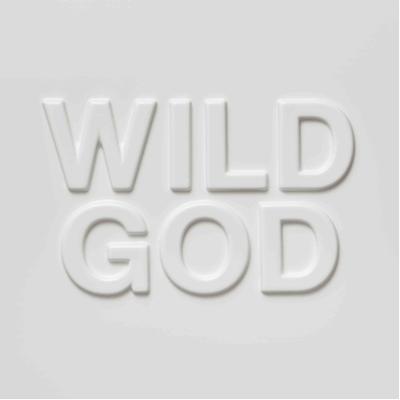
To discuss Nick Cave is to pose the question, “Can an artist be considered a canonical legend before he dies?” Like Bob Dylan, he is an artist who exists out of time, as if he has always been present in our and always will be. But while a major part of allure is Dylan’s enigmatic essence, Cave is far more direct, far less prone to toying with us—and, as he makes clear on Wild God [PIAS], nearly as artistically untouchable as His Bobness (who happens to be one of Cave’s heroes). Nary a single human being on planet Earth could cogently rebut the assertion that Cave is, unquestionably, a dyed-in-the-world artist with precisely no (living) peers—and, yes, we are including PJ Harvey, Warren Ellis, Mick Harvey among them. (The sole exception is Johnny Cash with whom Cave collaborated in 2003, the same year in which the national treasure passed.)
It would require writing a book to justly analyze, comprehend, and fully appreciate Wild God, quite possibly Cave’s best album of all time, on the whole. That is particularly appropriate because Cave—in addition to standing tall as one of the greatest musicians of the past 50 years, regardless of genre—is also a reputed author, composer, and actor. And that’s not even the half of it (or the quarter, fifth or sixth of it). A downright cruel battery of tragedies have befallen Cave over the years, with the deaths of two of his sons standing as perhaps the most devastating but by no means the only examples. It is beyond human comprehension how Cave has not given up on life; even more astonishing is his preternatural ability to become an even stronger, more confident and more spiritually devoted artist. Through his actions and even mere existence in this world support the argument that inner strength, not just pieces of work, should be considered in discussions about an artist’s merit.
In quintessentially true and transparent Cave form, he sings the following on the Wild God song “Cinnamon Horses”: “I told my friends some things were good/ That love would endure if it could … I said we can’t love someone/ Without hurting someone … Because love asks for nothing/ But love costs everything … I said we should not hurt one another/ Still we hurt one another … I told my friends that life was sweet … I told my friends that life was good/ That love would endure if it could.” Lyrics such as those are as precious as gold was when excavators rushed to the West to pan rivers for nuggets or even specks of it. And such delicately, consciously created, and literate lyrics are diminishing in culture due to the insurrection—no, not the political one at the Capitol four years ago, but rather the assault waged on our cultural lexicon and thrown into hyper-speed due to social media. We don’t know what words mean anymore. Which, in turn. means we cannot coherently communicate with one other. Which, in turn, leads to isolationism, social division, and other types of fracturing that we still have yet to comprehend.
For centuries—maybe millennia—we have assumed that profundity can only be expressed through language that is impenetrable to the layman. But as Cave told me in a 2003 interview around the release of Nocturama, “I just wanted to write songs that were lyrically simpler. … On the last record (2001’s No More Shall We Part), I felt a great need to pile on the words. I shied away from that on this record.” Cave’s decision to use that same tack on Wild God is absolutely critical and makes it one of this year’s masterpieces. As a man with thoroughly inventoried spiritual fortitude, commanding artistry, philosophical prowess and—most importantly—the knowledge of how to deal with grief, we absolutely needed Cave to hand us a musical decree convincing mankind that we can overcome shock and awe campaigns disrupting the lives of people across the world. Best of all, he achieves this magnum opus with joy and humor, ensuring the record isn’t a life-draining listen from start to finish. The Seeds and additional guests sing with an exuberance that very closely resembles the gospel-choir uplift that Jason Spaceman embedded into Spiritualized’s later work. Hard as it may be to believe, Wild God even has a laugh-out-loud lyric that reinforces Cave’s command of his creation. On “Frogs,” Cave sings—without deviating from his normal vocal delivery—“Kris Kristofferson walks by kicking a can/ In a shirt he hasn’t washed for years.”
With that lyric and a few other inside jokes, Cave doesn’t handicap or undercut his album with a lack of seriousness. They’re just occasional reminders that he doesn’t want to be anyone’s steely-eyed strongman, pastor, or cult leader (even though he would’ve made a great one). Surely, the worldly Cave is well informed about the widespread, demented, and self-injurious yearning for strongmen across the world, and the accompanying rise of authoritarian regimes in a growing number of countries. All of which to say that Cave, intellectual and artistic genius that he is, does not have the answers to all the world’s problems. But he is one of the most fluent and revered musicians on the subject of grief. With that in mind, when you are overcome with grief amid the tumult we need not detail, don’t search for an instructional YouTube video on how to cope with it. Wild God is a far more worthy star to follow in these dark times.
FLOOD recently released its list of the top 50 albums that the outlet’s contributors determined mattered most in 2024. Expect it, once again, to be regarded as one of the more authoritative and reputed chronicles of the year in music.
What follows are my reviews of releases on the list, and a related interview to boot, that FLOOD published this year:
Infinite thanks for your support, and that of my invaluable editors at FLOOD and other outlets that tolerated my contributions, in 2024. It mattered this year more than ever before.
For my pre-2024 writings on the aforementioned artists and many more than appeared on other top 10 lists this year, go to my Interview Index and Reviews Archive.
Lastly, stay tuned for The Bad Penny‘s annual Top 10 Albums of the Year list for 2024. (That is, if you place any value in rundowns like those.)
With Gladiator 2 in theaters, hear the immortal Nick Cave–who wrote the screenplay for the underrated Australian Western The Proposition, among others–talk about the rejected script he wrote for a proposed Gladiator sequel, at the request of fellow Aussie Russell Crowe, shortly after the release of the 2000 original:
In honor of Wild God, the just-released 18th album by Nick Cave and the Bad Seeds, New Noise published a previously unreleased and unabridged interview I conducted with the Australian rock legend/bookworm more than 20 years ago. Go here to read our lengthy conversation, which shows a lighter side of the sullen superstar.
“Will someone give this guy an Oscar already?” It’s a question Nick Cave fans must be asking these days. No, not in regards to the wiry legend’s acting skills, although he has popped up on the big screen a few times. Rather, what many argue Cave merits is at least a nomination for the ace work he’s done crafting soundtracks, especially in recent years. Continue reading →
I’ve caught up with Nick Cave a few times over the years, but he was at his wittiest during this conversation from seven years ago, prior to the release of his Nocturama album with the Bad Seeds. Continue reading →










 The Bad Penny (beta)