“Canada feels more united than I’ve ever seen it.”
–Elephant Stone’s Rishi Dhir
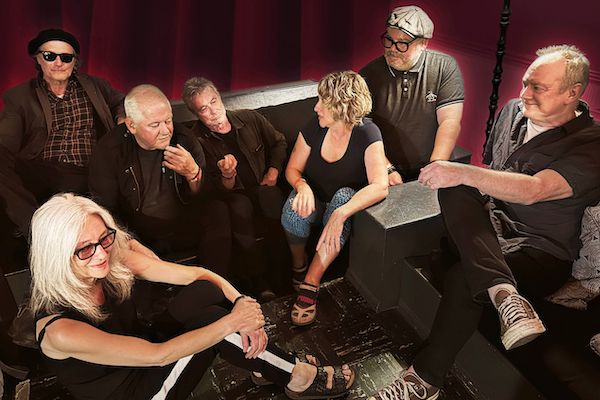
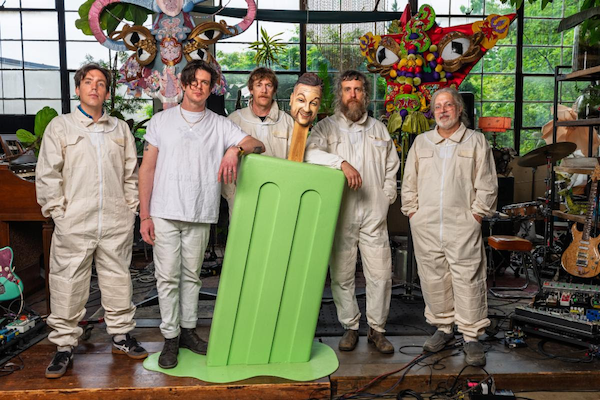
When The Bad Penny caught wind that a band had released a song called “Fascists Killed Yer Rock ‘N’ Roll” as a single, we immediately invited them (Elephant Stone) to participate in our ongoing series On Tyranny, which focuses on how fascism affects artists artistically, emotionally and personally – and lets them set an example for other musicians that it is OK to criticize and protest the government.
Rishi Dhir, leader of the psych-pop squad from Montreal, graciously accepted our offer and answered some questions related to artists and the potential ways in which they interact with authoritarianism. We bring you the interview, which was conducted over email, on the eve of the 20-year-old group’s new album, ASHA, coming out tomorrow via Elephants on Parade in tandem with Little Cloud Records.
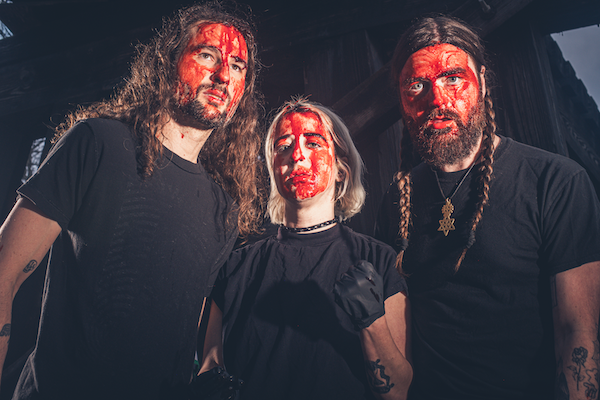
As The Bad Penny tours the world, asking musicians in every country we “visit” to name their top 10 bands – usually of the heavy-music variety – we are consistently surprised by the selflessness and passion with which said musicians vouch for their fellow citizens. Thus far, the most striking example of this reassuring phenomenon – a poignant reminder of the positivity of patriotism versus the nastiness of nationalism – comes in the form of Hrafnablót, a brand-new, self-described “sorcerous” folk‑metal band hailing from Iceland.
Pity the fool who thinks of Iceland as a barren country with a frozen music landscape. Much to the contrary, Iceland has a red-hot metal scene, which most of us in other parts of the world are ignorant about only due to geographical location and a lack of sufficient curiosity about countries other than the one in which they reside. Enlighten yourself with this stunning list of bands masterfully compiled by Þórgnýr Einar Albertsson, bassist and backing vocalist for Hrafnablót.
But before you do, check out Hrafnablót’s recently released video for “Heljarhlíð,” the latest single from their debut album, Guðlaugar Saga, due September 11. Pre-order the tantalizing album on their Bandcamp page … you may very well agree with us that Hrafnablót deserve placement on the very list that Þórgnýr so graciously made for us.
—
Iceland’s heavy music scene is relatively small and tight-knit, but pretty varied. The bands below range from early death metal to atmospheric black metal, folk metal and shamelessly colourful power metal. What connects them is that each developed a real identity rather than sounding like a smaller Icelandic version of somebody else.
Sólstafir’s journey from raw black metal into post-metal and beyond is one of the clearest success stories in Icelandic metal. Records such as Köld, Svartir Sandar and Ótta gave them a sound that became internationally recognizable while being unmistakably Icelandic. Bands from here are constantly described through weather and landscape clichés. With Sólstafir, that language actually makes sense.
Without the cinematic accompaniment, John Carpenter’s music releases—Lost Themes, Lost Themes II, Lost Themes III: Alive After Death and Lost Themes IV: Noir—are, similar to the band Goblin, or the music David Lynch issued late in his life, sometimes frustrating in that one instinctually wants moving images to accompany them. This time around, Carpenter tries to bridge that gap—the artist is notorious for doing whatever the hell he wants to do, whenever he wants to do it—with Cathedral, the soundtrack to a graphic novel of the same name.
Excitement is building as the release date for the sixth studio album by red-hot Boston rock band Slothrust nears. But there’s some additional news that, while not as seismic as the unveiling of What They Grow in the Garden will be on September 18, band leader Leah Wellbaum (vocals, guitar) exclusively told The Bad Penny that Slothrust is now a foursome.
“We’re both multi-instrumentalists,” Wellbaum said during a video interview on Monday, referring to herself and drummer Will Gorin writing and recording music together in the studio. “He played bass on this last record [2021’s Parallel Timeline]. And it’s been really fun seeing him step into other instrumental roles.
“He’s obviously an incredible drummer and also a really great guitarist,” Wellbaum continued. “It was really fun to see what he would do, what he did on the bass to play with himself and to interact with the music that he was so involved in crafting. And because we both play all the band instruments, it’s fun to be able to explore as a two-piece in that way. That being said, it’s really nice to be able to perform with more people.”
The theme of mclusky’s first foray into recorded music has remained intact ever since My Pain and Sadness Is More Sad and Painful Than Yours’ initial release. It established that, right out of the gate, drummer Mat Harding, guitarist/vocalist Andrew Falkous and bassist/vocalist Jon Chapple were so sardonic that they must’ve had their tongues pressing against their cheeks throughout the entire record (whether that be of the demos or the studio versions of the songs). To ask whether mclusky were more devoted to late ’90s/early ‘00s sarcasm or social commentary would be the equivalent of calling heads or tails before a soccer game.
Just a couple of months after ‘90s indie-rock/post-hardcore legends Shudder to Think announced four autumn concerts for later this year, Monday brought even more seismic news: Craig Wedren and his band of misfits – well, they used to be in their younger years; now they’re matured into very fine gentlemen – are putting out their first record in an eyeball-bursting three decades.
Well, try this one on for size: Five days ago, we published the Venezuela installment of The Bad Penny‘s new series in which we touch base with a seasoned musician from a non-U.S. country to get real-life recommendations (as opposed to artificially generated ones from Spotify) about the best bands in that artist’s homeland. Diego Ramirez, frontman of heavy garage-rock band Joudy, cultivated the list for that edition of the series, and one of the artists he deemed exceptional is another heavy garage-rock band Niño Nuclear. (If you don’t know about Ramirez’s harrowing escape from Venezuela due to rampant violence, be sure to read the story and watch the accompanying video interview in this edition of The Bad Penny’s On Tyranny series.)
While Niño Nuclear relocated to Santiago, Chile, in 2019, the band left an indelible mark on the country where they were born – but are thriving even more so now. After hearing Ramirez talk glowingly about the members of the group – including guitarist/bassist Frank Pereira; Mechu and Julio, who both provide vocals and play guitar; bassist Fernando and drummer Leo – we thought what better musician to enlighten us about the top 10 best bands in Chile for the latest edition in our series.
After many periods of reflection and deliberation, The Calculus went through a transformation resulting in him wanting to focus more on the world around him – and political matters in particular, as they now infiltrate every aspect of our lives.
“I came to realize that anything is right or left,” he continued. “It’s all division and distraction from looking at people that are hoarding money while everyone’s suffering. We have a guillotine, it’s time to start chopping heads. Things need to be changed from up top in order for things to start getting better.”
Some bands – especially hypocritical ones that refer to themselves as “punk” or “hardcore” – have the audacity to blaspheme those traditions by lamely copping out with “we don’t do politics” as an excuse.
Baltimore’s Angel Du$t – who would burn retinas if they were any hotter right now – are not one of those cowardly bands.
In the latest edition of On Tyranny (published without that header on Post-Punk), we interviewed Justice Tripp – the band’s mainstay member and lead vocalist – who does not mince words. Ever.
Deliberately or not, Maria BC broadened their horizons and engaged with the world in a way the artist hadn’t done before with Marathon, an album that teems with more sincerity and human emotion than the past two releases. Those records were certainly noteworthy, but Marathon felt like a truer work of art in that it recognized, if not empathized — an action that is actually very difficult to accomplish, even though marketing companies recklessly overuse and thus distort its meaning — with Americans and the hardships they are currently experiencing.