On Tyranny: Sam Burton Says He Won’t Be ‘Bullied’ Into Not Speaking Publicly About the Palestinian Genocide
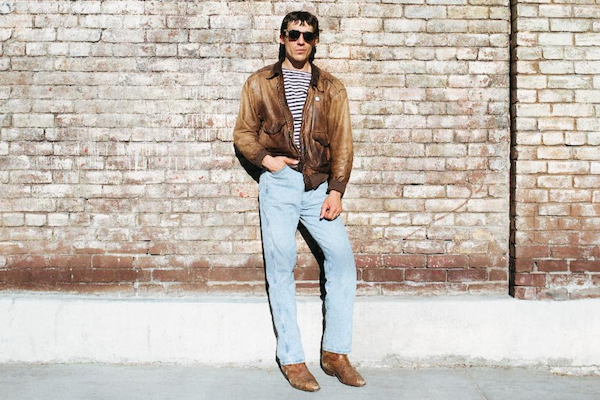
Yesterday, we brought you the first part of our conversation with Sam Burton, a member of the cherished Captured Tracks family who released his third solo effort, Fairweather Friend, on October 30. That portion of the interview mostly revolved around the record and his development as an artist when he moved from Ogden, Utah, to Los Angeles.
We also promised you that today we would roll out the second part of the interview, in which Burton – whose father is Palestinian – bravely addressed the genocide that continues to occur under the direction of the Israeli government. Without further ado, here is the exchange we had about that subject as part of The Bad Penny‘s ongoing On Tyranny series.
Did you want to bring that sensibility into this record as a way to counteract the negativity that’s been so pervasive in recent years in this country? I know Highland Park is a bit of a bubble, but still, one can’t escape the news these days and the national sentiment.
Not specifically. Creative work, and artistic work in general, is kind of a protest against oppressive energies in itself, because it’s self-exploration, and you become more of who you are. You have to rely on what you love and connect with. And I feel like the powers that be, they tend to want to take your individuality away [and make you] become like everyone else.
The more that you’re reflecting, and the more that honest emotions come through, they make people in turn become reflective. And if you become reflective, you might start to question the systems that are at work and maybe not feel like you’re such an outlier for feeling differently than everyone else does. So I never necessarily thought to myself, like, I would like to do something in opposition to something else, because I allow who I am to grow and be seen in the work that I do. And hopefully it can make someone else feel like they want to do that same thing.
That’s a really important point you’re hitting on because, as Americans, we tend to think so much that self-determination is built into us intrinsically. What you just said reminds me of pretty much every book I’ve read by a Russian author where the main thread is that their identity and ability to think for themselves is stripped away from them. Kafka too. When the topic of tyranny or authoritarianism comes up, a lot of people seem to think, “What would I do in that situation?’ Well, a lot of it wouldn’t be your choice. A lot of it would be other people pulling the strings. So do you find a certain joy in expressing the ability to – especially given your family background – make your own decisions and choose to be social, choose to be loving and choose to be a positive influence on the world? Was that present during the writing of the material?
With moral things like you were talking about, maybe we think they had a choice. Maybe they didn’t. Or whatever. I do feel like, even on a level where it’s not forced, to know truly how you feel about something and not always follow the collective morality thing … sometimes it’s really hard to discover how it is that you feel. Jung said something along the lines of – this is not verbatim, but it’s along the lines of, like, every moral quandary is a creative problem. So you have to use your creativity and go a little bit deeper to know what is right or wrong for you, because every time you’re thinking about something moral, you have to access your own principles. And if you don’t know what your principles are, it’s really difficult to do something like that. So we just typically will lean on the collective that we are engaged with.
That could be on a larger scale or it could be on a community scale. There’s lots of ways to become influenced. So the more that you awaken, it’s really about finding out who you are and living your life and going through things and seeing how it plays out. Then you have to have the courage in order to stand by that, even if it means that it may cause [negative] consequences or alienation. I feel like, in my process of writing, it is not always totally apparent how it is that I feel about something. But in doing it, I start to see what I’m saying or how I feel. Sometimes, I look back at a song a year [a year after I wrote it], and I realize I was talking about something that was right about to happen that hadn’t happened yet. But I could feel it happening on some unconscious level, you know?
Very well put. Sometimes I think about right after the 2024 election, walking around Boise – where I live – and getting the sense of people shifting into this mode of, like, “OK, well, that’s how it’s going to be here from now on, or at least for the next four years. So I’m just going to adapt to that and go into survival mode if I want to make it through this. I gotta keep my head down and keep my blinders on.” Multiple relatives told me that, and I was like, “No, no, no, no, hold on here, we got to grapple with what just happened and really reflect on how we want to be as people and how we want to treat other people, as opposed to just having the results of an election dictate how we’re going to be as personalities.” I want to tie this into the title of your album, Fairweather Friend. After the election, did you find yourself choosing which friends you wanted to retain and which you didn’t? Or did you feel like you were more judgmental toward people after the new climate blossomed?
I try to not judge people on their coping mechanisms with what’s going on, because all the lower-class people – and that’s almost everybody now – we all have so much more in common with each other than the ruling class. I try not to think or focus on what divides us and try to engage people on a level of, like, “OK, I see what you’re talking about, and this is how I feel.”
The “fair-weather friend” thing goes back to values. It could be literal, like, “This was a friend who I thought was a good friend, and they’re not,” or something like that. But it’s also some of the things that we attach ourselves to, like value systems. Like, I’m going to be a musician and I want to be successful. These are kind of like fair-weather friends too, because their attitudes don’t last. They don’t endure hard times. They’re not really tied to life and death and real shit. You know what I mean? So, in that sense, it relates to something larger, you know? You just have to kind of be like, “OK, what really matters to me?” Most people are truly just scraping by, and there’s not much that they can do.
Wen the genocide was starting, I was pissed off that more artists weren’t talking about it – especially a bunch of them who are generally loudmouths who have something to say about everything every chance that they get, who virtue signal at every chance that they get. All of a sudden, they were completely silent, you know? Part of me was just like, “Fuck you guys, you’re cowards, I always knew it, and now it’s confirmed.” And then I was like, “No, no, hold on, some of that’s true, and I have to look at myself in the same way and be like, ‘What are you a coward about?’” My grander point is basically, you can really just focus on yourself and what you do. And if you do what you can, and you make it look like it’s something that one could do, then other people will feel like they’re allowed to do that too.
So I’ll say – and I feel like that’s the story of the record too … there’s points on the album, especially at the beginning, where there’s a sense of alienation. And then it seems like, in the middle, there’s this reckoning that you can be yourself and not have other people dictate how you want to live your life and how you want to see the world. And then, toward the end, it’s a reminder of, “Well, people can be rotten, but at the same time, there is hope and prospects that people will come around.” And then, and the very end, it feels like there’s another realization – it’s like this realization after realization – which is just a really cool thing with an album, that you’re not just building up to one realization, but like, at the end, it’s like, “Oh, people are complicated. And they’re not always the same every day.” And perhaps that’s what has made them more sympathetic to what’s happening to the Palestinian people.
So you do feel like that’s been the case?
It’s really hard to say, because even though we are very much alike, a lot of us don’t identify as being alike, you know? And so I don’t always know what it is that makes somebody become empathetic. With this situation specifically, it’s very confusing to me because we can see, at any point, tons and tons of images of incredible human rights crimes. Like, just barbaric, awful, crazy shit. And some people don’t feel any way about that, you know? And this is what’s so confusing … you can have somebody be, like, a Trumper or a conservative or whatever, but then, as a person – on a day-to-day level – they’re the sweetest people and so generous. Some of them work with immigrants, some of their best friends are immigrants, and then, meanwhile, they’ll hold these ideological beliefs that are so anti who they are, and it’s so weird. So there’s this big split for tons of people.
The way I think about politics in general is, what if this thing was right in front of me, and I was facing it, what would I do? And if my ideas conflict or are cruel or are different from that, then there’s something I need to investigate. With [the genocide,] the media was going to hold its viewpoint — it was going to defend Israel; it always has — but then more and more people were like, “Wait a minute, this is fucked up.” And it took an incredible amount of carnage for that to start happening, which was concerning to me. But then it did slowly start to happen, and [the media] had to respond. They had no choice. So then they started to cover it somewhat differently, and people who had different viewpoints slowly started to change their mind about it.
It just makes you wonder … because this situation is so obvious – the statistics, the numbers, the history – you look at it and think, “This is obviously a really terrible thing that Israel is doing,” right? But it’s like someone isn’t getting [to that realization] until they’re told by the media or their peers, so it makes you wonder, what is it that causes somebody to change their mind? And it also shows you how powerful the media can be, and how much faith people actually have in it. One of my favorite things about this all is that people are starting to say, “Oh, I don’t trust these news outlets anymore.” And it’s like, “Yeah, you never should have, because they clearly have an agenda.” We should be reading everything with skepticism. There can be truth in The New York Times, but we should always be approaching it with a sense of “Who do they work for, what do they think, where do they come from?”
Well, the irony — like you’re saying — is that the media wouldn’t have even attempted to shift to a different opinion were it not for the public pressure. It’s this weird thing where the media is telling us what to think but, at the same time, the only way it changes is due to public pushback. I still think back to the DNC in 2024, when they wouldn’t even let a Palestinian speak at the convention. That’s insane. So, one last question: Coming from your family background and heritage, if you recognize that you’re automatically wanting to steer away from discussing a controversial subject in your art, does that make you want to double down all the more?
I think that, at this point in my life, I don’t necessarily feel like there’s a particular subject that I would feel uncomfortable approaching. There are certain subjects where I think I’m not the right person to be a mouthpiece for, or speak on it, or I have to learn more before I have a public opinion on it. But I don’t necessarily feel – yet – bullied into feeling like I can’t talk about something where I’m going to lose something if I do. Because, frankly, I’m not very famous or successful; there’s nothing that I really have to lose. So I feel like I want to talk about anything that I believe can be true.
Sam Burton’s Upcoming Tour Dates:
11.13 – Dublin, IE – Workmans Club
11.15 – Glasgow, UK – The Rum Shack
11.16 – Manchester, UK – YES (Pink Room)
11.17 – London, UK – Scala
11.18 – Lile, FR – La Bulle
11.19 – Paris, FR – LePopUp!
Related stories you might also enjoy:
• Inspired Musician Audrey Keelin of Artists United for a Free Palestine Discusses Relief Efforts
• Metal Band Malevich ‘Had a String of Shows Canceled for Some of Our [Pro-Palestinian] Activism’


Leave a Reply