Sam Burton Kicks Off Euro Tour, Talks About Writing 30 Songs in 30 Days
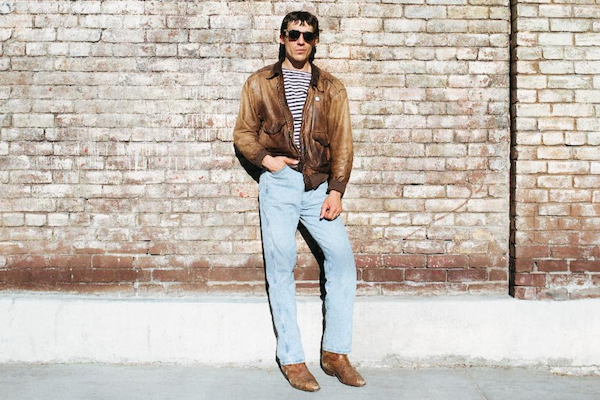
Sam Burton – a member of the cherished Captured Tracks family – released his third solo effort, Fairweather Friend, on October 30. Tonight, he presents material from it (and his previous efforts, of course) to European audiences during a seven-date stretch that will see the singer/songwriter perform in London, Paris, Dublin and elsewhere. Burton will open for Captured Tracks cohorts Widowspeak, a duo out from New York.
The Bqd Penny had the good fortune of catching up with Burton last month, and while we initially intended the interview to be an installment in our ongoing series On Tyranny, we were so captivated by his new record that our talk encompassed a substantial discuss of his new material as well. So today we bring you the part of the interview that revolves around Burton’s growth as an artist, for which he has L.A. to thank; and in the coming days, we’ll roll out the portion of our conversation that address the genocide in Palestine.
Hi Sam. It’s an honor and a privilege to speak with you ahead of the October 30 release of your third album, Fairweather Friend, on Captured Tracks. How’s your day going?
Thank you. It’s very hot in L.A. It’s like 100 degrees every day. But it’s good.
You’re originally from Utah, correct?
I am, yeah.
How much of your life did you spend there, and what brought you to Los Angeles and when?
So, my dad is a Palestinian. He moved to Ogden, Utah, in the ‘90s, went to Weber State [University] and met my mom there. We moved to Salt Lake City a little later, and then I moved to L.A. when I was 26, in 2017 or 2016. I had toured through L.A. before and passed through Highland Park and fell in love with it. It felt like a good place for me to go, so I went for it – but I didn’t know anybody here when I first came.
Do you have a lot of memories of where your dad was from?
No. My dad’s from the Jerusalem area and now lives in the West Bank. But I have lots of memories of Utah and Ogden. I’ve never been to Palestine, though.
How is your dad doing? Is he safe?
He’s as safe as you can be out there, you know what I mean?
Yeah. Has he been able to visit you?
No. I won’t get too into the family dynamic stuff, but basically, once he left, he stayed [over there].
What did you find so appealing about Highland Park that you wanted to live there? Was the community very welcoming?
Well, I didn’t really know anybody, and I didn’t have access. I just remember seeing all these artist types walking around, looking like they played music. It didn’t look like what I thought L.A. would look like. It looked like an old neighborhood, and felt small and approachable. Much more low-key than I had thought.
So more artistically stimulating than Ogden, I assume?
Yeah, for sure. When I go back to Utah now … I’m 35 now, and it’s like everybody my age is pretty much settled down there. They have kids and are married – or they moved away. Here, I don’t feel strange for dedicating my life to the pursuit of creative endeavors, because there are so many people here who do that. I feel like they are my peers.
So, since you arrived in Highland Park, did you develop as a more social creature over the years?
Yeah, for sure. You know, I moved when I was fairly young, I was much more outgoing at the time, for sure. I hadn’t really begun a pursuit of music that was very serious at all. I had this attitude of, like, I want to be a fan and go to shows and get inspired by what people are doing.
And so I did that. I went to tons of shows and tried to make connections with people – including at the coffee shop that I worked at. I really did end up getting very inspired by all the stuff that was going on. And, slowly, I felt like I was ready to try to write some songs. It really was important for me to get away from my immediate community [in Ogden], because I felt like I couldn’t branch out in the way that I wanted to. I wanted more anonymity and to see more people making music in the style that I like to make it in. And there really wasn’t a lot of that in Utah. At the time, I was mostly [into] electronic music.
Somebody who comes to mind in the area where you were living is Elliott Smith, but he passed away in 2003, before you arrived there.
I would say that I have more in common with [his] approach than, say, a synth-wave band. For me, the genre doesn’t really matter that much. It’s more of the attitude or the intention behind it. Something that’s self-reflective. Something that brings forward a deeper sense of humanity.
I could see that in a band like Suicide. I could see it in an artist like Elliott Smith. But at the time, I was interested specifically in what it looks like to be an acoustic guitar player and make it interesting onstage.
Was it challenging to interact with people on an everyday basis who were so driven, sometimes to the point of competition?
No, it was lovely. [My go-to coffee shop was] Collage Coffee. It was almost like a stand where there was only room for two employees at a time. There was nowhere to sit. You’d just walk in, and there was a counter and a place to sit outside. So every interaction was fairly intimate. The guy that hired me, he was a friend because I was going in there every day. He really connected with everybody in the neighborhood and was really positive with everybody. And then he quit, randomly, leaving just me and one of his old employees.
I thought, “I want to carry forward the energy that [my former boss brought to work]. I wanted to get to know everybody and be there for everyone in the way that he was, because I really missed him when he left. It was really fun to take that attitude on, and I ended up making just like loads of friends because of that.
That’s beautiful. At that point, had you already formed a band or did that become the launch pad for creating one?
I didn’t have a band. I never really formed a band when I was here, per se. I basically had started writing some music, and what I did was this song challenge thing that an old friend from Utah and I used to do. Basically, we would tell [participants,] “You have 24 hours to write six songs, and then we’ll share them with each other.”
So, later on, I thought, “What if I did that with just one song every day for 30 days, and instead of sharing it with just one person, post it on Bandcamp and Instagram?” So I did that. And some of the people that were musicians who went to the coffee shop ended up following me, because we were friends. They heard the music and asked me to do a benefit show for immigrants. I met the guy [Jarvis Taveniere] who produced my first record [2020’s I Can Go With You] there.
That’s cool. But then you had a tragedy that probably brought you together in a deeper way than you ever expected with your bandmates when you had a car accident. How long ago was that?
I think it was three years ago. That wasn’t my band; we were the backing band for somebody else. Then, when that happened, we kept playing together. After that, they started playing with me, and we would back each other up and became this band that would support each other. It brought us very close. We’re still very good friends. In the past, I’d always basically used studio musicians on my records, and it would be up to the producer for the most part [to decide who would participate]. Usually, I didn’t know them beforehand.
This time, [with Fairweather Friend], I really wanted to use the people that had been playing with me on tour that were my good friends. I wanted to actually get them on a record and record with them. I hadn’t done that before.
Sam Burton’s Upcoming Tour Dates:
11.12 – Leeds, UK – Brundenell Social Club
11.13 – Dublin, IE – Workmans Club
11.15 – Glasgow, UK – The Rum Shack
11.16 – Manchester, UK – YES (Pink Room)
11.17 – London, UK – Scala
11.18 – Lile, FR – La Bulle
11.19 – Paris, FR – LePopUp!
Check back tomorrow for part two of The Bad Penny’s conversation with Sam Burton, in which he discusses the Palestinian genocide and provides the latest entry in our ongoing On Tyranny series.


Leave a Reply