Pet Sounds #97: Freddy Trujillo Exclusively Details His Love of Birds with a Track-by-Track Breakdown of ‘Ave Trujillo,’ His New Solo LP
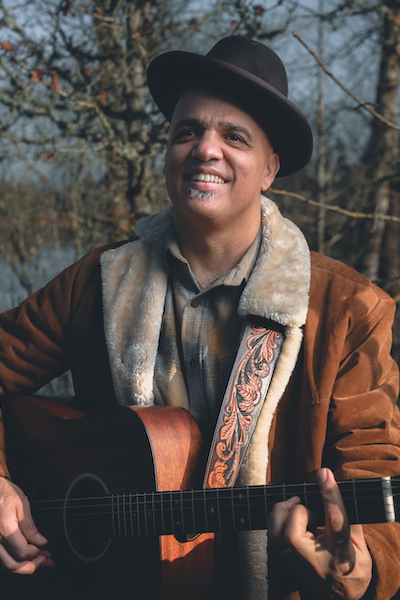
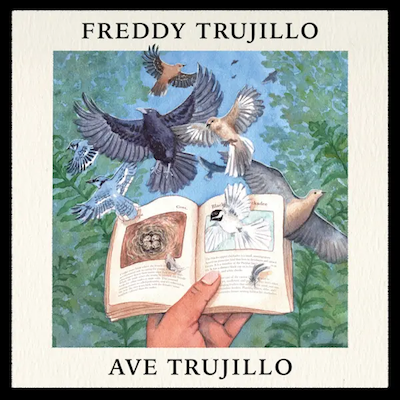
One of the lovier, naturalistic and harmonious albums to come out this fall season – and to be released by reputed indie label In Music We Trust’s formidable, 40-record catalog – is Ave Trujillo, the new solo record by singer/songwriter Freddy Trujillo. (“Ave” translates to “Hail” in Latin but “bird” in Spanish.) The bolero-style roots record also finds the former bassist for Richmond Fontaine and The Delines exploring Mexican musical traditions. Born in Simi Valley, California, Trujillo is now based in Portland, Oregon.
In this installment of Pet Sounds that lives up to the name of the series more than another, the solo musician with two decades of experience generously details his affection for birds and the close attention he pays to them – instead of, say, his cell phone – via a song-by-song reflection of Ave Trujillo. One is reminded not only of other spirit-filled roots music but also of classic transcendentalist American writers/philosophers Henry David Thoreau and Ralph Waldo Emerson, whose work emphasized communing with nature.
We cannot thank Trujillo, In Music We Trust and founder Alex Steininger enough for what is the most delightful and thorough track-by-track feature The Bad Penny has ever published.
[Ed. note: Bird spellings are a copy editor’s nightmare, with capitalization seemingly haphazard. So don’t shoot the messenger for what appear to be inconsistencies but were fact-checked to the best of this editor’s ability. There are spelling discrepancies even in authoritative sources about birds.]
1. “Black-Capped Chickadee”: This song is one of the first I wrote for the record. Originally, I thought I would go in the direction of a children’s record. The Black-capped Chickadee is a very common backyard bird. So, I wanted the track to be a backyard kind of bluegrass jam. I used one of the birds’ songs as a launching point for the melody of the tune. There isn’t much to say about it, but it capture the full cycle of a year [in a bird’s life]. The male chickadee is introduced. Then he finds a mate and builds a nest. Then he has kids. Bird facts turn up in a few of the songs [on Ave Trujillo]. The one fact that I looked up was whether chickadees mate for life or they find a different mate. It turns out that they don’t always mate for life. Maybe twice. So, I made the line, “All the boys at feeder say your life is done, we’ll see next spring if she’s the one.”
2. “Common Loon”: This song is inspired by the Chicano soul bands of the ’60s and the more recent resurgence that is happening right now with bands like Thee Sinseers, The Altons, Los Yesterdays, Thee Sacred Souls and Vicky Tafoya. I mention the classic singers Little Joe and Sunny Ozuna in the song. The song is [told] from the perspective of a fictional Chicano who was from San Antonio, Texas, in the ‘sixties ’60s. He was in a failed group called The Gents. My dad always talked about a band he was in called The Gents, so I used that name. This particular [fictional] singer met a girl from Minnesota and moved there with her. He thought he would be unique there. He ended up in a failed relationship and [having] a failed music career. He became homeless and an alcoholic. So, the song has a double meaning. He is drawn to the bird the Common Loon. And at the same time, he is a loon on the street.
3. “Mourning Dove”: This song is about a singer/guitarist named Raúl [Ugalde] of a band I was in called Caguama. He died of a heroin overdose. So this song is a memory I had of telling his parents about his death. The lyrics [revolve around] me telling the dove the story. After hearing its song I ask it, “Did you lose your friend last night too?” Just like “Black-Capped Chickadee,” the melody of the tune is a variation of the dove’s tune. Which is a very melancholic song and is why it is called the mourning dove. The story I tell the dove is that his father got upset at me for telling the truth in front of Raúl’s mother. He thought I should have told just him.
4. “Canyon Wren”: This song has a violin doing a descending melody similar to the song of the canyon wren. I wanted the song to have a very desert- or canyon-like vibe to be a backdrop to the habitat of the bird. The story is [told] from the perspective of a father whose daughter went missing. It is inspired by the amount of women who go missing daily, especially in rural areas such as Native American reservations or at the border. [Her] father is now haunted by the call of the canyon wren. When his daughter was a child, she was really into birds, especially the canyon wren.
5. “Blue Jay”: This song was inspired by the songwriters Jerry Leiber and Mike Stoller. I love their songs. I was especially thinking about “Rockin’ Robin” when I was writing “Blue Jay.” When I hear people describe blue jays, they always [sound] so annoyed by them. [Ed. note: Wikipedia, a supposedly objective source of information, describes blue jays as “noisy, bold, and aggressive.”] So I [wrote] the song to make out the bird [as] a horrible neighbor. Like the Leiber and Stoller songs, I wanted to exaggerate about the bird, but I also threw in some facts. On the West Coast, people often refer to a scrub-jay or a Stellar’s jay as a blue jay. I mention that they can imitate a Red-shouldered hawk, which is a fact. I really wanted to make the song to [have] a very East Coast vibe. I was shooting for a Latin boogaloo-type sound [reminiscent of songs by] artists like Willie Bobo or Mongo Santamaría. But also, like Fear mentions in the song “New York’s Alright if You Like Saxophones,” I [included] a sax solo. I also wanted to make a little parody of the West Coast vs. East Coast hip-hop rivalry. I am not talking about the West Coast species; I am talking about the actual blue jay, which is an East coast bird.
6. “Mocking Bird”: This song is a little bit of memory of there being more mockingbirds when I was younger and living in Los Angeles. I am also making a subtle observation that habitat loss is similar to gentrification. Like a lot of my songs on past records I make a comment about the Treaty of Guadalupe Hidalgo [which was signed in 1848 and ended the Mexican-American War]. [The song includes the] lyric, “Rudy says to the neighbor when they complain about the noise to go to hell, and that the land was once Mexico and they don’t teach that in school.” I also have a memory of staying up late enough that we would actually start hearing the mockingbird start singing around 4 or 5 in the morning. I have specific memory of sitting with my dad having a beer super-early in the morning. We were outside and I started to whistle back at the bird, and it copied me. My dad was blown away, not realizing it is a mockingbird.
7. “Crow”: This is [a] gothy, Echo & The Bunnyman-inspired tune. There [are] a lot of people I meet that love the crow. They often get tattoos of a crow. In Portland, we have a huge population of crows. Not sure why. It could be because of homeless [people leaving] a lot of garbage that they eat. So they are [inadvertently] killing [the] species. Every evening, hundreds of crows fill the sky and head west toward downtown. This song is from the perspective of a guy who had a girlfriend that left him for another guy. Every time he sees those crows, he is tortured by her memory and the tattoos of crows on her back.
8. “Phalarope”: A phalarope is a water bird. This song is inspired by facts about the bird. One of the behaviors of the bird is they swim in circles in the water to try make the food from the bottom of the water come up by making a funnel. I chose the style of this song to be a little like the music from Veracruz, Mexico, called Son Jarocho [a traditional folk music from the region]. The music of Son Jarocho is cyclical. So I point out that life continually repeats itself. The more things change, they [more they] stay the same. The other fact is that the roles switch [with the phalarope]. [With] other, birds the female is the plain-looking one and usually spends more time on the nest. But [that’s the role that the male] halarope [plays]. I wanted to be sneaky without being super-politicall and make the observation that we don’t always need to fall into those old-school [traditional gender roles].
9. “Turkey Vulture”: I am not sure what it is about, but I like the lyrics. The chorus states that the turkey vulture are beautiful from far away, but when you are close, they are ugly.
10. “Vermilion Flycatcher”: This was the last song that I finished. It recalls the memory of the bird being an “accidental.” In birding terms, that means a bird that flew way out of its normal habitat range. The reason I wrote it was because I saw the vermilion flycatcher around my father’s funeral. I saw it as not an accidental but a sign from my dad. I say in the chorus, “You have given me life and are now a ‘lifer bird.” “Life” is another birding [term] for a bird when you see it for the first time in your life.
[Ed. note: The closing song, “Flap Party,” is an instrumental.]
For more on Freddy Trujillo to buy his sonorous new album, Ave Trujillo [for only $5] – and his other releases – go to his website.
Check out the Pet Sounds archive, where you’ll find contributions from Osees, Deerhoof, Sleigh Bells, Pigs Pigs Pigs Pigs Pigs Pigs Pigs, Cattle Decapitation, NORMANS, Nick Oliveri, Melvins and many more.


Leave a Reply