Exclusive Lyric Video Premiere: Sehore’s ‘IA’ Is a Master Class in How to Avoid Getting Trapped in the Algorithm
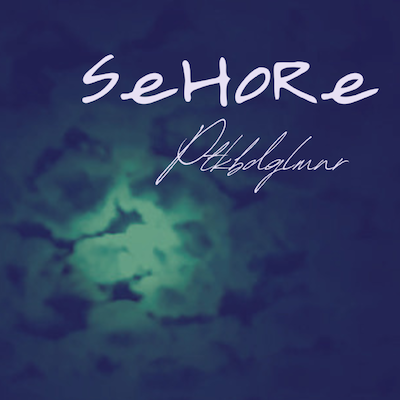
Familiarize yourself with Spanish experimental art-pop endeavor Sehore, and you will undoubtedly have encountered the most artistically and intellectually challenging musical act in quite some time. Sehore won the Silver Medal for the song “Pesadilla” (“nightmare” in English) and the Bronze Medal for “Bla bla bla (cha cha cha)” (we’ll leave that translation to you) at the Global Music Awards 2025.
With compositions written and performed in extremely complex time signatures, Sehore started last year with the release of its first two albums: Ladencia in January and Husfikbur in September. The group’s project’s album, Ptkbdglmnr (due November 20), is led by the first single “IA.” Sehore describes it as follows: “The rhythmic figures shift between different internal groupings of five (3+2, 2+3, 4+1, etc.), creating a fragmented and unstable pulse that mirrors the theme and is built on the diminished scale. The track alternates consonance and dissonance, using kitsch elements and miniature structures.”
As we introduce the video for the thought-provoking – or mind-screwing, take your pick – “IA,” we had the good fortune to speak exclusively with Sehore about the song, upcoming album and project itself.
Did you land on the album title Ptkbdglmnr as a way to be playful with your growing fanbase, to challenge them intellectually — or to mess with search engines and the algorithm?
The title Ptkbdglmnr is meant to unsettle the algorithm in its eagerness to homogenize and enforce uniformity. It takes inspiration from Trubetzkoy and arises from combining occlusive archiphonemes with other consonants that, in various languages, are interchangeable with one another (Pe‑Ta‑Ka, Bo‑De‑Ga, Li‑Mo‑Ne‑Ro). In the end, it produces a name that doesn’t point to anything recognizable. It’s not meant to be a riddle, but rather a way to prevent the title from generating expectations or prior associations. It continues the tradition of invented titles from previous albums such as Ladencia and Husfikbur, which are hard to remember due to their lack of meaning — or even to pronounce. This allows the listening experience to be freer and less conditioned … or perhaps not, and the opposite happens. The same logic applies to keeping the same photograph on the cover, changing only the color and the title. And it’s also the approach being used for the recording of the fourth album.
Why did you decide to release “IA” as the first single? In what ways does that song capture the essence of the record?
It’s a self‑critique. The song deals with a problem that affects us as human beings. The lyrics aim to describe dehumanized people: if Turing, in his experiments, tried to make a machine playing chess pass as human, today the opposite happens — automatized humans end up being confused with a machine. It’s not because technology has advanced further, but because, by thinking less and less, and although we’ll never know for sure whether we come from the ape, it seems clear that we’re heading toward the ape.
It feels as if we were living in a kind of dark “technological Middle Ages,” where escape routes are increasingly scarce. The fact that Emotional Artificial Intelligence can appear more empathetic toward otherness — as Levinas warns — is not a theme … but a problem. The song works as a summary of the rest, because the tracks with lyrics on the album describe everyday situations that, even if normalized, touch on aspects of human behavior that are unsettling for one reason or another. It all stems from the need to communicate personal fears.
Here is our exclusive premiere of “IA”:
Please elaborate on how that specific song came about – what sparked the idea, when and where you recorded it, if it was the first track that you created for the new album?
This album, like the previous ones, was recorded at Paco Loco Studio and mastered at Kadifornia by Mario G. Alberni. Although it was done less than a month ago, in August 2026, honestly, within the jumble of 15 tracks, it’s hard to remember the order in which they were made. It’s possible that the instrumental series based on Pina Bausch’s choreographies came earlier, where the music moves from consonance to noise through progressive metamorphosis. Since I don’t know how to read sheet music and never studied harmony, the result comes from my mistakes and errors when I try to measure things … that’s what happens. The idea comes from playing with numbers, like the combinations of binary language, 0–1.
The song uses a type of meter that isn’t common in popular music: it adds one extra beat (an odd one) to turn the usual four beats (even) into five. It’s what happens if you combine a waltz with a tango in the same track. This way, you can form groups of 4+1, 3+2, 2+3 … and other combinations that create a sense of instability. It’s based on the diminished scale, where the harmony stays enclosed without ever leaving it. That sound appears when I listen to two or more different kinds of music at the same time — for example, mixing the Libre Vermell or the Codex Las Huelgas with something else. In any case, the idea isn’t to revisit school arithmetic, but to let yourself be carried by a rhythm that limps along because it doesn’t fit into a perfect, symmetrical grid. That’s precisely the feeling the song tries to explain.
What direction did you intend to go with Ptkbdglmnr, and did you wind up getting there? What twists and turns occurred along the way?
It’s a path with many directions, and in the absence of a rational explanation… it means it makes sense. The detours and the accidental mishaps that occur along the way are precisely what make it possible. The direction is based on Kitsch, as described by Gillo Dorfles and Umberto Eco — the taste for bad taste. The first time I contacted Paco Loco and he asked me what kind of music I made, I replied: “corny.” My self‑taught way of trying to learn is to play the guitar without an amplifier while lying on the bed (in the studio it’s on a sofa, with an amp), imitating songs from different eras — and that’s already pretentious enough. All that effort is what results in an album. Without the mistakes, it would be an artificial naturalness at the expense of natural artificiality. So, in reality, it’s simply a continuation of the previous records.
How dizzying was it to receive such a flood of accolades in your first year as an artist releasing records? How did you prevent your overnight success from going to your head, and how are you keeping yourself centered?
A few days after the first album was released, the song Pesadilla earned the Silver Medal at the 2025 Global Music Awards, and seven months later, with the release of the second album, Bla bla bla (cha cha cha) received the Bronze Medal. That serves as an incentive — a sign that someone might be interested in listening to the songs. It’s as if a person were saying they want to keep hearing whatever you might do in the future, and that encourages you to continue down that path, rather than thinking it was the glorification of some flowery fluff. In a certain way — though not in a way that’s entirely certain — staying focused may partly come from the fact that this is a hobby.
Perhaps for that reason the albums aren’t complicated cinematic montages of tiny takes, but more like a single long shot: each instrument is recorded in one go, and if there’s any lack of coordination, it stays, because mistakes are what make the music feel human. There’s no obsession with infinite millimetric details. If some external noise slips into the recording, it doesn’t bother; it becomes part of the product. However, it seems the dominant characteristic is presenting music where everything sounds as it should — though perhaps that might be closer to something sterile.
Did you feel any sense of pressure creating a follow-up record to one that achieved such enormous critical success?
Criticism, in this sense, is a compliment. In any case, instead of external pressure, there is an internal need. As Cortázar said, you have to take the game more seriously, and it’s about continuing to explore as in childhood, which is why there’s a constant sense of continuation. For example, I think platform formats don’t allow for an album with a hundred songs, but that would be less standard and would give more freedom to anyone who wants to try this kind of experiment, instead of sticking to a specific way of publishing. Those rules are what actually create pressure when making anything.
To the extent that critical approval is an indication that your artistic creation is considered to be great, was it difficult to decide to go in a different direction with this record, and to what extent do you feel satisfied with the end result?
First of all, the praise is appreciated, but the attitude is closer to that of the eternal dissatisfied, and that’s why the albums keep coming one after another: the lack of conformism is the main driving force behind trying to make songs. In truth, it’s about sharing experiences with the people who want to listen to them, whether because they’re directly affected or because they wish to explore a world that might interest them. What is truly satisfying is that an anonymous person, whether nearby or far away on the planet, might say that a song, in some way, has spoken to them.
Sehore is on Bandcamp, YouTube and Soundcloud.


Leave a Reply