On Tyranny: King Youngblood Frontman and Black & Loud Music Fest Co-Founder Cameron Lavi-Jones Says Musicians Don’t ‘Understand How Much Power They Have’

It’s more evident now than ever: Musicians are at a crossroads. Do they pursue their art, even if it means shedding part of their fanbase that doesn’t agree with their belief in free speech and other American ideals? Or do they try to “stay out of politics,” which is no longer possible in a country where financial hardship, ICE raids and the suppression of dissenters occurs on a daily basis and on a widespread level?
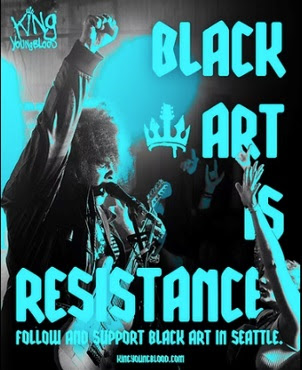
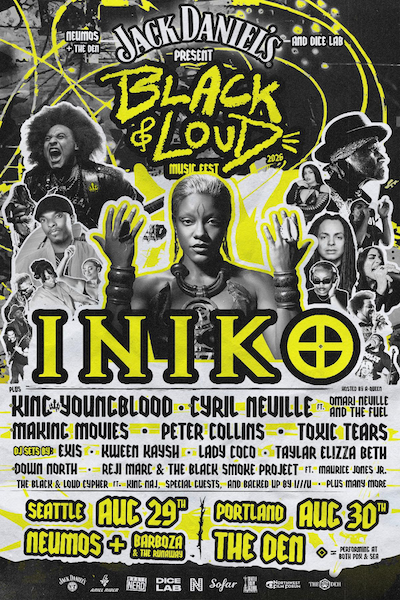
There’s no ambiguity when it comes to King Youngblood and their frontman, Cameron Lavi-Jones. He has chosen to be on the right side of history, is speaking out vociferously about his decision and doing whatever he possibly can to get other artists onboard. As the co-founder of Black & Loud, a festival taking place in Seattle and Portland on August 29 and 30, respectively, Lavi-Jones is expanding his reach to preach and proselytize to a grand scale.
The tagline for the event, which will feature performances by the Neville Brothers and many more, is: “In a world where independent music festivals are struggling, Black & Loud finds its footing and takes the Forefront.”
The Bad Penny could not be proud to present you with our conversation with Lavi-Jones, which we conducted over email a couple of days ago.
Thank you so much for speaking out against the authoritarian/fascist takeover of the U.S. government at a time when every citizen—and every artist in particular — should be. Do you recall the moment you felt it was time for artists who hadn’t previously addressed such subject matter to stand up and say something?
Thanks, man! Just trying to do my part where I can.
I think the moment that sits with me the most was during the Capitol Hill Organized Protest here in Seattle. It was a pretty politically charged moment in our city’s history, and I distinctly remember feeling like there were a lot of people missing the point.
I remember attending and feeling the swirl of activists rallying and identifying how important this moment was on the national stage for contributing to the movement for Black lives, yet I witnessed folks moving like the tear gas, LRAD (long-range acoustic device) and rubber bullets were shot so that folks could play soccer, throw raves in Cal Anderson, or move lackadaisically just because the cops bounced.
The protest had a lot of moving parts, and no movement is ever perfectly organized, but feeling that juxtaposition inspired me to do something about it. I reached out to a few other BIPOC organizers, educators, performers, and activists to stage This Ain’t No Picnic, an educational sit-in to get people activated and remind them how much work was really left to be done.
That day left a huge impact on me, and although it was one of the most challenging days of my life, I will always be proud knowing I did my best to stand up for what I believe in.
Do you think more musicians aren’t speaking out because they worry about alienating some of their current and potential fanbase, thus potentially lowering their income, or do you think they realize the very real possibility that the DOJ might target them?
I can’t speak for everybody, but I know everyone has to take the time to figure out their lane. Not everyone can afford the consequences of speaking out, not just for themselves, but also for their families and loved ones.
I think a lot of people forget that people who choose to move in open, public protest also have to calculate the risk. Some folks have people who need them to come home that night; some folks have the full blessing and support of their loved ones to do whatever they feel is necessary.
I think ultimately what’s more important is that people don’t fall into complacency, despair, or desensitization. If we’re going to spark any kind of change, we need to encourage and remind people that following through on tangible action within their lane is way more impactful than anything else.
All hands on deck.
How do you try to convince musicians to dismiss either of those aforementioned concerns and speak out regardless of the possibility that doing so could damage their career?
I think I just try to remind them that there are way more people who agree with them than don’t. Oftentimes, the thing that can activate someone is seeing others speak on it or make art relating to it. As musicians, our role is to spark that activation.
We have the power through our art to inspire the world we want to see. Genuinely, that’s why creativity is such a powerful weapon in the fight against decolonialism: it gives us the ability to imagine a world that’s different from the one we’re in now.
The people who benefit from us remaining divided, infighting, or being passive toward injustice are the ones who understand how powerful that inspiration can be. It’s the same reason books get banned or positive political messages get censored on social media. That inspiration is infectious when it’s intentional, and as artists, we have a duty to inspire.
On a personal front, it also gives us the opportunity to process. I know, for me, music has always been an outlet, and if the process of converting negative experiences into battle cries can inspire others while helping me process them, I know it can help other people too.
What direct impacts have you experienced as a result of what is effectively a coup happening in the U.S.? And have you witnessed any incidents such as ICE seizures, officials silencing dissenters, etc.?
It’s fucking terrifying out here.
King Youngblood has performed and spoken at a few different national rallies, but even still, our communities are impacted. My bassist Samy has shared with me how fearful his community is, even telling me how he’s seen ICE camped outside of his family’s church. My best friend works at Colectiva Legal del Pueblo doing immigration law, and he keeps me informed — not just on how this terror is becoming more covert, but also on what our options are to keep people safe. This hits home in so many ways. I’ve had shows where we’ve had to build a plan for what happens if ICE shows up, or I’ve communicated personally with fans about ways we can make sure they’re safe if they come to a King Youngblood show. All I can do is try to be prepared, offer support, and remind people that there’s tangible action for those of us who aren’t as directly targeted by this Gestapo.
A few tangible actions I want you to look into include getting involved with key organizations doing the work. So, if you need to, grab something to take notes and follow up. The Washington Immigrant Solidarity Network operates the 1-844-RAID-REP hotline for reporting ICE activity, mobilizes rapid-response volunteers, and offers a resource finder for legal and social services. The Northwest Immigrant Rights Project and Colectiva Legal del Pueblo provide critical legal services, community education and advocacy for families suffering due to ICE. The Seattle Alliance Against Racist and Political Repression organizes important disruptions, marches and protests; educates on the importance of community control and police accountability; and advocates for those most marginalized.
The Washington State Department of Children, Youth & Families‘ Family Separation Rapid Response Team is focused on protecting and reconnecting families impacted by detention and deportation.
Look into these organizations, and make sure that today, you don’t become stagnant.
Are you gratified or disappointed by the number of musicians who are taking similar actions of defiance and speaking out, and the way(s) in which those who are voicing their opposition are doing so?
Tough question.
I think I’m grateful to see more people talking about things, but disappointed in how many people are actually converting those words into action. I have frustration with folks who spend more time arguing online, policing identity politics, or playing the suffering Olympics than just straight-up doing something. When we spend more time doing these things, it can deactivate people from joining causes, creating uncertainty for people who want to do the right thing about where — or even if — they should be involved at all. It’s a unique elitism I’ve seen rise more and more on the left, and we need to cut that shit out.
There’s a big difference between holding folks accountable and contributing to an environment that doesn’t encourage newcomers to get involved. I get so frustrated when I see people full of negativity: “Bruh, we’re so cooked, there’s nothing we can do,” or “Voting doesn’t even matter anyway,” or “Yeah, it sucks, but whatever, the planet is doomed.”
Optimism with intention is activism!
The only people who benefit from these kinds of headspaces are the ones who benefit from the status quo — not hardworking people like you and me. To hold on to hope through this is way cooler to me than succumbing to surrender like that. It’s always been cooler to care, and moving with that hope is what gives us the chance to overcome times like these.
Lock tf in.
Has it been difficult to find camaraderie among other musicians, whether they be in your social circles, genres, etc.?
Absolutely. As a Black rock artist in the Pacific Northwest, you really feel the double-edged sword of diaspora. I am mixed race. My father is Black and my mother is a Sephardic Jew, so I’m already privy to feeling like an outsider even within communities I already belonged to.
Making music in a white-dominated genre, within a predominantly white demographic, means my presence alone challenges preconceived notions about what Black music can look and sound like. For non-Black folks, it can be a bit of a shock when they see my Afro and I’m not playing R&B, hip-hop or reggae. I’ve had a couple crazy experiences in that regard, lmao, but I digress.
For the people within my community, it’s about educating them that they have permission to be passionate about things without worrying about the misconceptions. I started King Youngblood to be the representation I wish I had growing up, especially as a child of Seattle music. I know I’m doing my job when other Black and Brown folks see me do my thing and realize, “I didn’t know we could do that.”
My hope is to lead by example and invite everyone along on the journey toward their own authentic passions, no matter who misunderstands or misperceives them.
Can you talk about any instances in which specific artists have confided to you that the instinct to self-censor has arisen during the process of writing songs, booking gigs, addressing audiences, or speaking publicly?
Nope! Not without violating the privacy of folks who deserve encouragement. But what I can say is that the folks who have confided in me were people looking for community and some way to combat their fears. So much of community work is reminding people that they aren’t obligated to be perfect — just to try the best they can. With cancel culture, real threats to our day-to-day lives, and what seem like insurmountable challenges, people self-censor because they are terrified. Terrified to say the wrong thing, terrified to be misunderstood, terrified to be made a target. But when you’re encouraged to confront that fear, that’s when you start to banish the cop in your head.
My grandma had a quote that always spoke to me that I usually share with people: “When you’re making something, it’s better to make a mess first and clean it up than never to make anything at all.”
Don’t worry about being perfect. So long as you’ve got a good heart and your eyes on the prize, any challenges will be learning experiences, not failures. We all have room to grow and need to afford each other that room to grow.
What is your response to musicians who say, “We don’t do politics?”
Yeah you do, dummy. You might just not know it.
When you make art or have any form of a platform, the socioeconomic context of your music, your fans, your shows — the entire world you build with your art — is defined by what resources are available to you and what resources are stripped from you.
Your creative choices, by default, are shaped by the political environment in which you live your life. You’re alive in the world. You are a political contributor and consumer. Those politics influence what you eat, readand think; who your neighbors are; your rent; and every factor that, in turn, impacts your art. Your music might not be distinctly political in its message, but you do, in fact, do politics.
What are musicians not understanding in terms of the gravity of the situation we are all in, and the fact that artists are often among the first groups targeted by authoritarian regimes?
I don’t think musicians are understanding how much power they actually have.
These authoritarian regimes thrive on pacified masses, misinformation, and keeping us divided by any means necessary to prevent coalition-building.
I remember when COVID hit, musicians were the first who had to leave and the last ones presented with the opportunity to return. And the reason was because of how impactful things can be when we gather.
Music builds bonds. It sets the stage for uniting over something we hear and feel, rather than just see. And in some ways, that builds the groundwork for developing coalitions.
One of the things that gives me a lot of hope is the underground scene. King Youngblood cut our teeth playing house shows in college, which required everyone to contribute in some way to make an impactful show.
As musicians, we need to understand how much power there is in being able to bring people together, especially when the stakes are so high. There’s a lot we can do online or over the phone, but accessing the power of gathering in person can lead to much more direct action than just staying in our bubbles.
What rays of hope, if any, have you seen since you started speaking out? The No Kings protests? The public refusing to support the Iran War? Protests outside detention facilities? That Olympian dude getting the DOJ’s case against him tossed?
Shout out that dude.
All of it.
The new generation is working out the kinks, but they’re not so easily subscribing to non-action. More people are talking. More people are interested in getting politically activated, and for a lot of them, that first opportunity was at a rally.
It gives me hope that these entryways have such high turnout because it means there’s a percentage of people in there who are interested in finding their lane. Whenever King Youngblood is asked to speak or perform, I always remind those folks to convert that curiosity into tangible action.
But on a personal note, my biggest source of inspiration really is Black & Loud Fest.
There hasn’t been a single year of this festival — or a King Youngblood performance at it — where I wasn’t in tears looking out at a crowd of white, Black, and brown faces uniting with me in celebration of artists like me.
The rays of hope I feel always come after the reward of taking the risk of being hopeful and translating that hope into action.
It’s a positive feedback loop when you take the leap.
Are you hopeful for the future? If you can elaborate beyond a yes or no answer, it’d be greatly appreciated.
Absolutely, I’m hopeful for the future.
I feel a lot of things relating to what it’s going to take, the challenges we will face as a community, and the work required to keep people hopeful. But for myself? I choose to believe in a world where hope is a call to action.
Where hope isn’t just some quote in a speech or an Instagram mantra, but rather a philosophy that prompts us to make that future.
That future is worth the effort, and nurturing hope is the only way we’ll get there.
Buy tickets for Black & Loud Music Fest, happening in Seattle and Portland on August 29 and August 30 respectively, here.
Go here to check out the On Tyranny interview archive.


Leave a Reply