On Tyranny: Emperor X Contends That Arts Communities Need Heterodoxy During Global Political Realignment
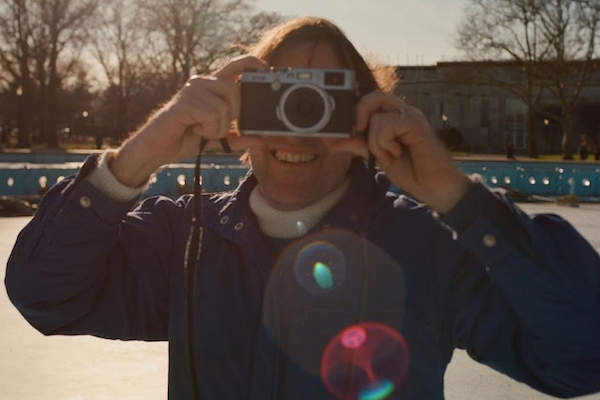
Gifts come in all shapes and sizes. But The Bad Penny has never received nor published any piece of writing as remotely profound, thoroughly researched, detailed, brilliant, educational and exceptional as a dissertation-style thought piece/ intellectual analysis of this website’s On Tyranny series that Berlin-based American singer/songwriter Chad Randall Matheny, a.k.a. Emperor X, recently sent us. In his comprehensive analysis, Matheny discusses the connection that On Tyranny has to the broader worldwide trend that the educator and noise-pop provocateur refers to as “The Global Political Realignment” that is currently underway.
Before you dig into Matheny’s masterpiece, this seems like an appropriate time and place to tell readers of this website, and specifically On Tyranny, that maintaining it has been and continues to be a tremendous challenge. While I will elaborate on the story of the series at another time – truly, what Emperor X has created here is worthy of your attention more so than any other post on this website – publicists, musicians, friends and family members have recommended I halt or even terminate this series amid the growing threat of fascism in the U.S.
[Emperor X’s new album, Unified Field, will be issued by Bar/None and available for purchase starting June 26. Rest assured that The Bad Penny will cover the release heavily. Read more about Emperor X on his website; and his Instagram, Facebook and Bandcamp accounts.]
The primary purpose of On Tyranny series is to focus on how fascism damages artists artistically, emotionally and personally; provide them with a “safe space” to discuss their fear, anxiety and anger toward the Trump administration; increase solidarity among like-minded artists; and let series participants set an example for other musicians (young ones in particular) that it is OK to criticize and protest. This is a long way of asking you to explain to people in your own words to people who might not be aware that when fascists gain power, artists and intellectuals are among the first groups they censor, jail, deport or murder.
The events that have unfolded since Trump’s second inauguration have, for better or worse, made it abundantly clear that, while the world is more complex than the human brain can even conceive, the times in which we are living are reducing virtually every sector of our society into black and white terms. Never before, at least in our lifetimes, has the difference between right and wrong been so abundantly clear in the U.S. And yet, those who take a stand and resist the fascist takeover of this country are often criticized by even their loved ones (not to mention assaulted by MAGA); risk their health, financial stability, careers and relationships; and constantly live in a state of fear of retribution by authorities who have made it abundantly clear that they do not believe in democracy.
Just last week, a music industry colleague with whom I have collaborated and admired for more than 25 years recommended I discontinue On Tyranny because the video interviews connected to it are drawing relatively little web traffic, which indicates that the series has no value to, and wastes the time of, artists, publicists, managers and even fans of music. Again, there will be a time for further discussion of these matters. But in the meanwhile, those who do follow installments of On Tyranny can rest assured that I have no plans to end or even pause this series anytime soon. Doing so would be a slap in the face to the artists – and, equally important, the readers and viewers – who have already gifted us with their time and energy, and those who will do so in the future.
On that note, let’s read what one of those individuals, Emperor X, has to say. I guarantee that you will be changed after reading it.
Arts Communities Need Heterodoxy During Global Political Realignment
Historian Steve Davies recently argued that we are living through what he terms the “Great Realignment,” a worldwide political shift away from familiar left/right polarity of state control vs. market liberalism and toward a newly salient axis of identitarian nationalism vs. humanist globalism (Nelson, 2026). This essay argues that our current realignment conditions profoundly change the relationship between politics and artists in niche genre music and art scenes, especially transgressive ones like punk rock and its emo/indie/electro offspring. I share anecdotes of my experiences navigating these conditions as an artist and creative director, and end by proposing deliberate scene heterodoxy to help artists and their communities weather the political storm and nourish the democracies on which our creative lives depend.
I – Introduction: Kurt Orzeck’s On Tyranny Series
Echoing Tim Snyder, the mission statement of Kurt Orzeck’s On Tyranny series on The Bad Penny laments the 2020s slide of many Western democracies towards authoritarianism. And echoing Herbert Marcuse, the mission statement also suggests that arts communities are uniquely powerful potential antagonists to authoritarianism. Like Orzeck and the many guests and featured artists in the series, I am convinced that arts communities have a special duty to pull every cultural lever available to resist democratic decline. This is especially true for arts communities with transgressive aesthetics and a history of leftist- and anarchist-adjacent social mores like punk, metal, hardcore, hip hop, and electronic music scenes.
Sadly, I am not convinced that our arts communities are pulling the right levers. We are relying on old habits and collections of positions that no longer cohere. Human rights and pacifism, feminism and gender critique, anti-racism and indigenous rights – all of these pairs now sit less easily together than in the very recent past. The thoughts that I sketch out below illustrate these new tensions. I spent decades touring to share my music in North American folk-punk, emo, and freako indie pop scenes, and I also help operate a Berlin music venue that features jazz and wild new jazz-adjacent ambient genres that don’t have names yet. In one-on-one conversations in green rooms, in watching what artists say and don’t say on stage, and in reading hundreds of band bios and booking proposals, I have gained an understanding of two new tendencies in how musicians relate to politics that are far more pronounced in the 2020s than in the previous two decades. One is an increasing expectation for artists to take moral stances in public. I welcome this because it is urgently needed in the fight to preserve democracy. The other is an increasing pressure to take specific dogmatic stances by uncritically repeating slogans. This is poisonous because it demonstrates the same intolerance for ambiguity that our authoritarian opponents trade in, especially in Davies’ under-discussed new idpol vs. humanism political alignment.
We must update our habits, both as individuals and scenes, to harness these new tendencies in our communities for good. Below, I will first ground my remarks in personal experience as a vocal advocate for my Ukrainian friends since the start of the full-scale Russian invasion. I will then describe my impressions of both the positive and negative public moral tendencies I note above, followed by a brief recommendation of how I think the historical fulcrum moment we find ourselves in can be best harnessed by arts communities who share my democratic, pluralist, humanist values. I offer these thoughts and recommendations with the neon orange caveat that I, like all of us, am making this up as I go along. I am not a historian, or a social psychologist, or an expert in political science. But no one asked to be born into Fascism 2: Hitler, But Funnier, and we’re all playing catch-up, me included. In what follows I may say something unfounded, or conspiratorial, or unfalsifiable, or flat out wrong — if not in this mini-essay, then at some point soon in another one. But muting myself until I am 100% certain of every assertion is a much worse option than sharing well-grounded but imperfect impressions. I share my impressions in that spirit, and (as the fifth section will make obvious) welcome any dissenting discussion that might result.
II – Ukraine and the Left: a Personal Example of Realignment’s Impact
I have been an out-and-loud leftist for decades. It seemed to me a simple matter of decency to assume the best about my neighbors near and far, to back universal human rights, to stick up for the persecuted, and to object to unearned wealth and unchecked power. I question none of those particular stances. But in my discussion with people in person and online, the basket of concrete political commitments commonly referred to as “left” began to change in the late 2010s, and completely fell apart in 2022 in the run-up to the Russian invasion of Ukraine. Isolationism and brown-red alliances now flourish, to the point where the Ukraine weapons supply positions of J. D. Vance and Briahna Gray-Joy are hard to distinguish. Some leaders on the left took courageous stances supporting weapons delivery to Kyiv, among them Bernie Sanders and Alexandria Ocasio-Cortez. But it is more common to find Ukraine-supporting stances among centrists like Joe Biden and Emmanuel Macron or traditional conservatives like Mike Pence and Nikki Haley. My old leftist political heroes like Yannis Varoufakis, Jeremy Corbyn, the comedy-pundit-nerds on Chapo Trap House, and the American Green Party were at best naively pacifist, and in some cases gleeful Putin apologists.
I found myself verbally sparring with fellow artists of a left-wing slant – people with whom I am allied on domestic issues – as they repeated nearly verbatim lines from Russia Today or other Kremlin-affiliated media outlets. They in turn saw me as having caved to Bush-era interventionist neo-conservatism. Our conversations were unproductive, because we were not debating values; we were experiencing epistemic incommensurability. To them, I was an imperialist puppet. “Of course Putin is bad,” went a common line of thought, “but NATO is also powerful, and who’s to say that they’re any better?” “Of course Putin violates human rights,” went another one, “but isn’t human rights discourse merely Western chauvinism in disguise?” “Of course Russia is a danger to world peace,” went my least favorite, “but war is always wrong and you can’t end war by fighting in one.” Don’t take my word for it, either: alignment of hard-left and hard-right media and political figures against Ukraine is a well-documented phenomenon (Gadzynska et al., 2024).
My dorky black-fingernail-polish-wearing LGBTQ+ spectrum Ukrainian friends and I disagree with those who say we are conservative NATO puppets. We see ourselves as advocates of (and in their case literal participants in) armed resistance against authoritarianism. I have been to Ukraine many times now to perform and raise money to purchase drones, armor, weapons, and medical supplies, and most recently to record my new album Unified Field with the help of my artist friends there, many of whom now serve in the army. I had these and other critiques of arms supply to Ukraine from Western leftists in the back of my mind when I went, and I felt a duty to show them how wrong they were by shining a light on artists in Ukraine who were beating back actually-existing imperial fascism with bullets and blood. I doubt I overtly changed many minds, but I’m confident I put down some cover for others from the left of the music world who shared my understanding of the radically-changed global security environment, the threat the Russian Federation poses to vulnerable people, and the necessity to update our political priors.
There are many other vectors of this left/right scrambling: internecine conflicts in feminism, subtle distinctions of stance in the Israel-Palestine conflict leading to shunning, etc., but in my experience the Russian invasion of Ukraine was the most clarifying incident and the most direct cause of my reluctant drift away from the old left. I remain committed to economic democracy and wealth redistribution, I remain an advocate for migrants and a fierce anti-racist, I remain a loud defender of my queer friends, and I still prioritize environmentalism. But I feel less and less at home in my old left wing. The world has changed but the old left remains identitarian, selectively pacifist, likely to oversimplify complex moral discussion into one-dimensional Foucaultian power analysis, and reliant on obscure category games and pathos in discussion rather than terminological clarity and reason. It is a disappointing mess, and it creates a conflict in which I find myself moving against the grain in my milieu.
People even – gasp – get mad at me sometimes! And they say things to me online about it!
But I have discovered a secret, my friends, and it is the point of this missive: disagreeing doesn’t hurt! My colleagues on the old left are not my enemies. To borrow a frame from their beloved Hegel, we are simply building a new synthesis together, experiencing the birth pains of a new and potentially better humanist political project. This conflict is a good, healthy thing, the infant pulse of a newly-confident democratic humanist movement. Shying away from this tension between my emerging conviction that the world needs strong, armed liberal states would be disingenuous. Pretending it isn’t weird that I disagree so often with people I used to agree with would be disingenuous too – what, am I center-right now? Of course not. It’s simply that our old political compasses are less useful during this period of realignment. And in an era like this, spirited discourse and heterodox thinking ought to be encouraged as one of the best ways for the humanist values at the core of punk ethos to survive the current upheaval. Let’s explore what that kind of flexibility fares today in our scenes, and imagine how it might fare tomorrow.
III – Artists Taking Moral Stances in Public
(Most identifying details have been changed, and quotations paraphrased, to protect the anonymity of the people below.)
A few weeks after the 7 October Hamas atrocities against Israeli civilians, and a few weeks into the wave of Israeli atrocities against Palestinian civilians we now euphemistically call the Gaza War, I was about to play a concert. Several musicians and I were backstage checking the news on our phones. I asked one of them if she planned to speak about the conflict on stage, as we were all worried about the violence. I didn’t write down her exact reply, but this is close: “Man, I’m a stoner musician. I don’t know why anybody expects wisdom about international relations from me.” I found this both sad and deeply honest. I admired the humility, but I also noted a fear of being wrong. However, just a few hours later she found a better answer: I heard her say on stage, unprompted, “Cease fire!” This showed the audience enough about her moral thoughts on the conflict for them to see her care for civilians, but not so much that the artist seemed to be yielding to pressure to take a particular stance on Palestinian statehood, the definition of genocide, or the specifics of a conflict without adequate consideration. She simply felt a duty to say something true and constructive.
Some artists offer a more direct, confrontational response to this pressure to weigh in on political matters. On “Show Me Your Head,” New Jersey indie rock act Little Hag (2025) tosses the following rhetorical hand grenade masked as a threat in the chorus:
Mark, show me ya head
Elon, show me ya head
Jeff, show me ya head
I want to put a hole in it
Donald, show me ya head
JD, show me ya head
Ben, show me ya head
I want to put a hole in it
It would be easy to misconstrue these lyrics as a call to violence, and therefore inherently destructive and risible. But they are better understood as a provocation that can, if properly metabolized, nourish healthy community. By being so extreme they demand critique and trigger discourse. “Show Me Your Head” creates a huge opening for moderates to punch back. The moderate urge to discourage or suppress incendiary lyrics like this is misplaced, because the lyrics create the very conditions in which moderate arguments can shine. At the same time, the extremist urge to discourage or suppress moderate critique is equally counterproductive; there can be no point of work like this other than a) inciting actual violence, which I recommend ruling out, or b) engendering discussion about the morality of violence and how the power a victim of violence holds relates to the moral status of violence against them. Like saying “Cease fire!” on stage, “Show Me Your Head” is also constructive, but not by saying something true. Instead, Little Hag creates a vivid prompt likely to set off healthy discussion within their milieu. Crucially, in order for Little Hag’s provocation to work in a healthy way, neither pearl-clutching pacifists nor Maoist class warriors benefit by disengaging or shushing one another. The provocation provides people who share an objection to the power of billionaires, but who disagree about the ethics of violence, an opportunity to synthesize a novel position in a discussion which too often relies on dogma and turns potential allies into campist foes.
IV – Slogans and Purity Testing
Politicized musical culture is a long tradition in the local and niche scenes I participate in, and in mass media as well. The anti-apartheid movement in 1980s pop culture, many Irish rock musicians’ vocal criticism of both British or Irish militants during The Troubles, and the MTV-era pop music focus on Tibetan rights in the 1990s share much with the current anti-Zionist BDS movement, Extinction Rebellion, Black Lives Matter, No Kings, and other popular left/left-ish causes. I see plenty of raw eagerness to resist autocracy and tyranny, as seen in the previous section. But I see little evidence that we are capable of the organized, disciplined, big-tent resistance that Caetano Veloso and the Tropicália scene mounted against the Brazilian dictatorship, or that Victor Jara in Chile and the nueva canción movement threw at the Pinochet dictatorship, or that Fela Kuti and his anti-dictatorial hedonism in the Kalakuta Republic leveraged against Obasanjo’s authority in Nigeria.
Contrast the examples in the previous section with what I heard a month later. I was again relaxing backstage with fellow musicians pre-gig, this time in a small city in the American Midwest. One of them sat down cheerfully next to me on a couch, opened a beer, clinked bottles with me, and cheerfully said “Death to Israel, right?!?” I heard him use similar language on stage that evening. Two things are noteworthy here. The first is the casual dehumanization of Israelis; I know many committed anti-Zionist BDSers who would disavow such a careless broad-brush slogan. The second is that he assumed without warrant other than my presence in a DIY punk venue that I agreed with his maximalist position. This created a situation where someone who objected to the phrase “Death to Israel!” would likely either immediately enter an argument about a hot-button issue or self-censor to avoid it. Danger, Will Robinson!
I managed to figure out a third option: I took what he said seriously. I rejected out of hand the idea that he meant to murder millions. But I pointed out to him that since he didn’t mean that, it was very difficult to figure out what the toast he offered me on that green room couch did mean, so it was not possible for me to share that toast with him — not because I disagreed, but because I did not know enough about what he meant to be able to determine if I agreed or not with the sentiment I would be toasting. Perhaps there was a version of that toast I could share: By “death” did he intend a figurative pointer towards something more like a coup d’etat in which the Israeli state ceased to exist and was replaced by a different political entity? Did he mean a defeat of Likud in the next election cycle? Did he mean nuking Tel Aviv? By Israel, did he mean everyone on the territory of Israel, including the minority Arab Israeli population, or did he mean specifically Jewish Israelis, or did he mean specifically IDF combatants, or did he mean anyone worldwide with an Israeli passport? He seemed exhausted by this discussion (who could blame him, I was an insufferable vibe-killer), and we wound up speaking cordially about other topics. But I suspect we both left that interaction a bit wobbled – he by my refusal to repeat a slogan that he assumed anyone worth speaking with would endorse, and me by the casual mood with which he delivered such murderous undertones despite clearly not holding any murderous intent.
I experienced a similar but much more public incident which left a lasting impression. Mid-set, opening for a much larger act who enjoyed the support of a very young and activist fanbase, I took a small break between songs to tune my guitar. In the silence I heard a cry from the back: “GENDER ISN’T REAL!” I assumed the person was intending to get a cheer for the liberatory idea that gender is determined in the mind and not by biological sex, but I wasn’t sure: the simplistic “GENDER ISN’T REAL!” could have meant the exact opposite — that constructed gender was not real in comparison to biological sex, which was. So I smiled and said nothing. After an awkward pause, the same voice said, “HEY, EMPEROR X, WHAT DO YOU THINK ABOUT THE FACT THAT GENDER ISN’T REAL?” I replied much as I did to the person on the couch above, with (probably very annoying) analytical engagement. While tuning, I flagged the terms “gender” and “real” as worth interrogation but emphasized my belief that all people should be free to determine the course of their lives, including their sexual and gender identities. There were no boos, but I’m good at reading rooms and I came away with a feeling that I had not quite cleared the hurdle the person in the back set up for me. Had I simply bellowed “HELL YEAH, GENDER ISN’T REAL!” into the microphone, the crowd would have clapped and forgotten about it 10 seconds into my next song. But doing this would have missed out on an opportunity to get at the humanist root of the gender discussion. If I could do that, even for a brief awkward minute in the context of a rowdy punk show, it felt like a win. But it certainly didn’t feel like what I was supposed to do in that moment, for that scene. My instinct to seek clarity killed the vibe.
I’m not at all sure that this annoying habit of insisting on precision and clarity before repeating a slogan is enough to build the discursive muscles in our scenes, but I am sure it is the best tool I have found so far. The above moments are not unique. I was many times on a stage during fraught political moments, or at a protest, and felt strong pressure from the crowd to repeat slogans I thought deserved greater consideration before I chose to echo them. This care is often mistaken for centrism or depoliticization, when it is quite the opposite. But at the moment this is illegible in our scenes; insisting on clear terms is for shitlibs, not punks. That needs to change if we want our scenes to nurture our democracies through genuine discussion rather than encyst dissent into convenient pockets that any authoritarian state can easily excise whenever it sees fit.
V – Normalizing Ideological Heterodoxy
It’s easy to say purity tests are bad, ideological diversity is good, and realignment requires us to be open minded about forming alliances with people who hold positions that we previously, but no longer, opposed. But there’s saying, and then there’s doing. Things get squirrely when practical questions arise. “Do I let a guy wearing a MAGA hat attend the gig I’m putting on?” “Is it ethical to distribute my music via a platform that may be financially entangled with amoral or immoral organizations that do not share my values?” “Do I have to say [insert current popular slogan], even if I disagree with some of its implications?” “Should I be in a band with someone who is a different kind of [insert niche ideology] than I am?” “When is violence permissible, and to what extent, and to whom?” These questions are confounded when they are raised in punk/DIY circles which have a much easier time agreeing about being anti-[badthing] rather than pro-[goodthing]. They are confounded even further when so many loaded, ready-made, thought-terminating cliches exist to answer them: “No one has a right to lecture colonized people on how they resist imperialism.” “No war but class war!” “ACAB!” “The only good Russian/Zionist/landlord is a dead Russian/Zionist/landlord!” “Death to [personification of badthing]!” It’s easy to throw bricks. It takes alignment and coordination and patience to build a house.
The On Tyranny series is a house. It’s a valuable resource of interviews and features for those who hope to learn from artists who are already resisting the worldwide slip away from democracy in their arts scenes. There is a place for the orthodox, disciplined energy of a militant labor union against unfair work conditions, for a Marxist-Leninist insurgency against an entrenched oligarchy, or for a civic-nationalist movement in response to an existential external threat. But as someone not facing that kind of emergency, I can afford for the brick I contribute to the series be encouragement to take a reflective pause and build the discursive muscles we’ll need to save our democracies. Flexing those muscles sometimes looks like annoying nerds getting terminology right, and sometimes it looks like a right-wing farmer with an energy drink and a tryzub tattoo fighting side by side in a trench with a green-left anarchist to prevent a nuclear-armed superpower from ethnic cleansing them out of their shared hometown. Discourse is uncomfortable and beautiful, and while it is urgent that we fight, it is equally urgent that we defend the healthy pluralist organs of our communities rather than letting them fall prey to dogmatic dead zones.
In any healthy arts community we see two virtues operating side by side: left-coded compassion to keep the doors open wide, and right-coded (whether we want to admit it or not thanks to Foucault) strength to set and keep community standards. A territory of open, compassionate strength is fertile ground on which realigning members of the old left and their surprising new liberty-valuing allies from a realigning old center-right might grow something new, beautiful, and tyranny-resistant. Its exact form is impossible to see from our vantage point in 2026, but it is unlikely to be a boring centrist compromise, and more likely to be some kind of mutant hybrid that draws from elements that are currently ideologically distant. Subcultural arts communities, including DIY scenes, have a role to play in this realignment if they are willing.
How can they play this role? It is not enough to be merely politically active. We must be politically active in the right way – that is, discursively minded and ready to forge new alliances where possible. This will be uncomfortable, but try some of these hybrid slogans on for size just to get a sense of what the future might bring, some of which may make you laugh and some of which may make you furious:
GUN RIGHTS FOR TRANS KIDS!
FREE CHILDCARE FOR INDIGENOUS WOMEN WHO DECLINE ABORTION!
CHRISTIANS FOR WEALTH REDISTRIBUTION!
CAPITAL PUNISHMENT FOR CORRUPT BILLIONAIRES!
FREE HEALTHCARE FOR THE WOMEN-ONLY POLICE FORCE!
UN PEACEKEEPING TROOPS INVADE ISRAEL NOW!
What do all of the above slogans have in common? They are heterodox. They subvert orthodox expectations, by combination or novelty or both. Importantly, each and every one of them risks making someone, and possibly everyone, mad.
I recommend scene heterodoxy. Instead of policing yourself and your scenes for ideological purity and homogeneity, police yourself for being too orthodox, too loyal to any one political current. Treasure unique views, treasure annoying views, treasure good faith provocations no matter form which political direction they come. We must of course never allow hate and dehumanization in any of the -ism forms we name it on our Safe(r) Spaces posters. But outside of those narrow bounds, stop policing and start getting excited when someone does something ideologically weird or new. How do we accomplish this? There are many ways, but at the moment I can think of these five, each of which deserves its own essay:
1- Allow yourself to say dumb things, or to not say the things your friends are saying, fearlessly.
2- Allowing your friends to say dumb things, or to not say things you and others are saying, without suffocating criticism.
3- Celebrate constructive disagreement.
4- Stop conflating factual disagreement with value incommensurability.
5- Ask yourself, “Is my scene ideologically homogenous?” And if it is, be just as embarrassed as if it were race- or gender-homogenous.
You need friends who think you’re right. You need friends who think you’re wrong. You need friends who look up to you, and friends who you look up to, and friends who give you the grace of not expecting you to agree with 100% of what an arbitrary group think 100% of the time. Maybe you’re a strict Marxist-Leninist. Maybe you call yourself an anarcho-capitalist. Maybe you are a conservative Christian or an Islamist. Maybe you think all of those labels are stupid and decide each issue on its own merits. No matter where you sit ideologically, you need colleagues, not comrades. Example: I have many pacifist friends who think my maximalist position on weapons support for Ukraine is unethical, but we still welcome each other into our homes, and we still invite each other to our shows. Example: I think responsible gun ownership is a good thing, and I have a lot of friends who think this is insane. But they know this and still welcome me into their homes and invite me to their shows. Example: I am unconvinced by both Foucault’s critique-everything methodology and Sandra Harding’s version of standpoint epistemology, both of which underly a lot of contemporary gender-critical thought, and I have a few trans friends who love yelling at me about this over beers. But they still welcome me into their homes and invite me to their shows. It is precisely this ability to tolerate, celebrate, and harness disagreement as a community-building mechanism that arts communities need during periods of realignment if we are to keep our souls. This is not a watering-down of our values. On the contrary, it is living up to them.
Here’s the best part: everything I say above might be overwrought, or poorly framed, or just plain wrong. Probably is, statistically speaking. But I think that’s the job. Artists don’t swim in culture to say lowest-common-denominator slogans that maximize niche response. Artists try out saying interesting things that people might disagree with, and discuss them openly without fear of social sanction. Artists change their mind, WITHOUT SHAME, when they are convinced they their position is wrong. Artists are natural pluralists because they trust the wisdom of others. Or at least I do. And in that spirit, I hope someone reading this finds something to disagree about and starts a conversation with me. I hope they help me normalize constructive discord among allies. Call it productive discourse. Call it lib cope. Call it praxis if you’re one of my Marxist-Leninist colleagues. Or just call it disagreeing with each other without freaking out. Whatever you call it, our world is never going to improve unless we artists, supposedly the harbingers of a better, more just, more democratic, more humanist tomorrow, get way better at it.
Be skeptical of imprecise slogans. Reject pressure. Embrace argument. Get in, the water’s fine!
References
Davies, S. (2026, January 31). The great realignment: Why the new right wing politics is here to stay [Video]. YouTube. https://www.youtube.com/watch?v=BTYiIc9o8uI&t=1206s
Gadzynska, I., Tymoshenko, M., Kelm, N., Mikhalkov, S., Lytvynov, V., & Drozdova, Y. (2024, June 6). Roller coaster: From Trumpists to Communists. The forces in the U.S. impeding aid to Ukraine and how they do it. Texty.org.ua. https://texty.org.ua/projects/112617/roller-coaster/
Little Hag. [Little Hag]. (2025). Show me your head [Video]. YouTube. https://www.youtube.com/watch?v=Q5N-PSBE_sY


Leave a Reply