On Tyranny: Major Spark Opine on FBI’s New Bestiality Policy, GOP Normalizing Nazis, Refusing to Name the President on New LP
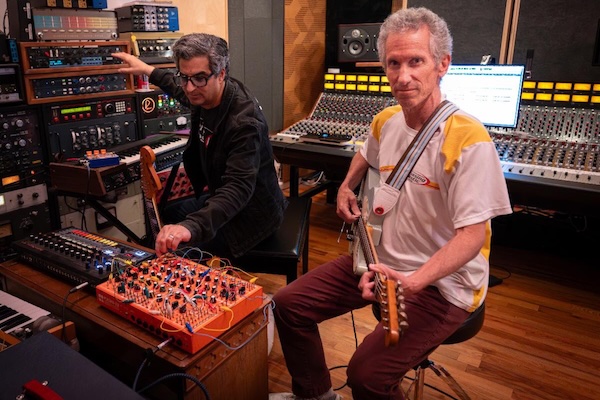
Avid readers of The Bad Penny‘s On Tyranny series are already acquainted with Boston-based protest-music rock band Major Spark, as vocalist/lyricist Mark Goodman recently contributed a list of what he considers to be the best protest albums and songs ever for us. (Check it out here.) The extremely generous band also granted us an interview to both further expand on their opinions about Authoritarian America, their recently released album Kill the Truth and much more. Joining Goodman in the conversation was multi-instrumentalist Brian Charles; their friendship has lasted almost their entire lives. Here’s a taste of Major Spark’s new record in video form, followed by the interview.
Hey guys. Even though you’ve consistently played music together over the past 25 years, I’m told you’re more than willing to recap the history of Major Spark — and even before it came into existence, when Mark was in a different mid-‘90s band, Magnet, which featured Velvet Underground drummer Moe Tucker. So let’s start with a recap of your history, if that’s your desire.
MG: So Brian and I actually go back to when we started working together in the 1990s, when I had a band called Foggy Notion, and then I also had Magnet. I came up and worked at Brian’s old studio, called Zippah [Recording Studio], which he ran for 33 years until a fire tragically took out the studio and basically the whole building where the studio was. So now we work in Rare Signals, which is Brian’s new studio in Cambridge, Massachusetts, right outside Central Square.
BC: With the help of a really cool GoFundMe, insurance money and other things, we were able to acquire the building.
MG: Brian’s done an amazing job with it. He’s in here every day, all the time. And he also teaches production classes at Berklee College of Music. We got together before COVID to start working on this new record. I hadn’t made music for a long time. I was actually into dance pop. And I’ve never written anything like that before.
So I sent Brian a song [of that ilk] and said, “This song seems so easy to do. Could we do this?” That ended up being the song “Beautiful Noise,” [and that set the table for a very] uptempo, positive album [of the same name]. There’s a lot of sad, whiny music out there these days, and we wanted to be a counter to that. Our second album was called Walk Among the Poppies. That was more of a straight rock record.
With this new album, Kill the Truth, we took a different approach that almost seemed jokey. I sat down with a piece of paper and wrote down song titles that I thought would be good to counter the Trump administration. I wanted a little bit of humor. So, as an example, some of the songs that did make the cut say, like, hey, the Nazis were not so bad, which is like something that you hear people in the GOP occasionally say these days.
BC: I don’t even think the word “funny” applies to this, but we’re so beyond that. The FBI director is allowing people with bestiality convictions to be federal agents now. I don’t know if you caught that yesterday. We’re in another world now.
MG: The last song on the record [“I’ll Be Your Dropkick Murphy”] is for people like my wife, who is a consultant and her client is the federal government. So she’s deep in this [nightmare] every day. She works on housing and homelessness issues. Her job has been affected [by the Trump regime and DOGE]. And so she’s a doom-scroller, which is why I say in the song that I’ll be your [notorious anti-MAGA musicians] Dropkick Murphys.
I’ve actually never done a record where I start by writing titles. I typically write many songs so that you can then pick the ones that seem to work. But if you write tons of songs, then you can edit and pick through them. I use a lot of improvisational techniques, bring a drummer in, pick up a guitar and just start writing.
And then I end up with a more stream-of-consciousness approach. The lyrics are less of a priority than the song titles. All in all, the album was very focused. Brian was very good at guiding me to approach singing about the Trump administration and fascism where I wasn’t singing the same thing on every song. We tried to cover all the different angles of [Trump’s authoritarian regime].
But we didn’t want to use personal names – even though there are fantastic songs in history that are about very specific things that use specific names. We do reference [late Senator Joseph] McCarthy and [Joseph] Stalin in one of the songs [“Jackboot Thugs”], but it wasn’t like we were singing about Marco Rubio and Pete Hegseth, even though they’re certainly alluded to. We didn’t want the record to be whiny and sad, and we wanted it to have a little bit of humor. I have immense respect for The Clash and the ability to [unleash] anger well. The Sex Pistols did too. If you know that you can’t do Joe Strummer as well as Joe Strummer, then you gotta try to do kind of your own thing.
The one specific individual I called out was Wayne LaPierre, who was the head of the NRA and said “jack-booted thugs are coming for your guns.”
When I caught wind of your record and read your manifesto, it was such a breath of fresh air that a band was actually putting it all out there and not just alluding to today’s horrors metaphorically or devoting just one song on an album to the atrocities that are going on. It’s really important to have a space for us to talk about this stuff but also to demonstrate to younger artists that they can speak out. Because they’re being affected in a very direct way by the Trump regime.
Did you guys have any hesitation at all when you made this shift that you’ve been alluding to and that’s in a lot of your promotional materials? More specifically, your decision to really go all out on this record with what you believe?
MG: So, two quick comments on that: One, I wasn’t aware that we had a manifesto – unless it was like the rules of the record, which were I think we didn’t want to use personal names because we wanted it to be evergreen so that the songs [wouldn’t become outdated], and we didn’t want to be whiny. Was that what it said?
Yeah, essentially. It also said the government is coming for our guns.
MG: Well, now they’re coming for our elections. But anyway …
To wrap up this conversation, so many bands I’ve spoken with about this series – even the ones that are willing to participate – are so reticent about speaking out. It seems un-American and cowardly to me, which is why I admire you guys and what you’re doing. I don’t blame those musicians entirely, because nowadays with social media and self-promotion and self-marketing, it’s incumbent upon an artist to do all the work to promote themselves. But it drastically increases the amount of respect I have for a band like you guys. Did it feel liberating to make this record?
MG: I have to say, it was fun. Brian might have a different answer. I don’t have much to lose, because I don’t spend much time on social media. There’s almost no social media presence for our music. It’s basically a collaboration. It’s me and Brian, and then we get other people to contribute as needed. One of our goals going forward is to add more contributors so that it really becomes something like a collective. But it’s not like we’re going on tour opening for Ed Sheeran and getting kicked off the tour.
We have very little to lose, to be quite honest.
BC: I agree with Mark. I think the stakes are pretty low. I mean, I’m a person who is in a studio every day. Even if I put a post up on social media – which I do; I’m fairly active – nobody really knows what goes on behind the closed doors of the studio.
For me, making the album was more of a puzzle that I wanted to help put together with Mark. A lot of my job is seeing where the current is going and trying to steer as best I can. And, at the same time, to do as little as I can to keep momentum flowing and then also try to take the emotions that Mark is putting into the lyrics, the sentiments that are in the lyrics and try to animate that with the music.
We bounce ideas off each other and break the lines, and then remake the lines, and eventually it becomes more in focus. And I think we’ve gotten pretty good at it at this point.
Find out more about Major Spark and snag a copy of their new album, Kill the Truth, on their Bandcamp page.
Go here for The Bad Penny‘s On Tyranny series archive, which includes more than 150 interviews with musicians including J. Robbins, Mark Mallman, Thalia Zedek, Bobby Conn, Alan Sparhawk of Low, Mekons and loads more luminatries.


Leave a Reply