Void of Light, Scotland’s Hottest Post-Rock Band Since Mogwai, Burst With Enthusiasm and Salute Cult of Luna in First-Ever Interview
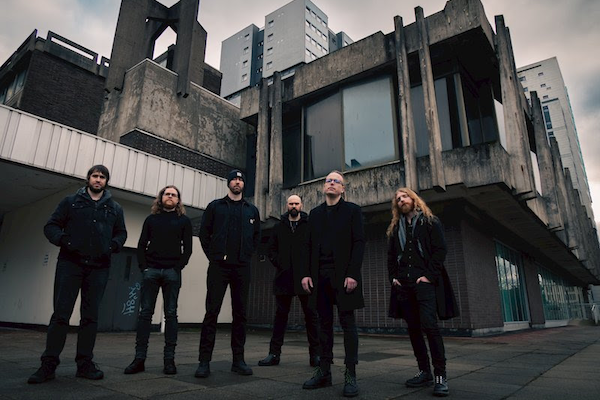
The Bad Penny had tallied about two dozen first interviews with bands in recent years, which we consider to be one of our proudest achievements: Getting those bands who are so, so good but don’t have the self-awareness or confidence to leap across the brook, even if they tumble into in the water.
For a group that banded together only about five years ago, Glasgow’s Void of Light are already showing remarkable prowess, adeptness and assuredness, especially considering their “formative” years occurred during COVID. Their debut full-length, Asymmetries (Ripcord), makes wanting to press the “skip” button almost as difficult as picking up a gun in a game of “Russian Roulette”: There’s a better chance than not that the next song on the record will be as good, if not better, than the last one. The irony, though, of course, if that you wouldn’t get to hear it – at least not the whole way through.
Bleakness is a recurring theme throughout Asymmetries, although by no means the central one. As the album title suggests, the force that propels the album is polar ends of a spectrum, and how the push-and-pull between them creates friction which, in turns, compels us to come to grips with reality and act.
“In their veining notes evasion feign illusive so kept in placid song and sought in empty ease in their veining notes evasion feign illusive rigid to the earth gifted to the raging sea,” singer Ali Lauder muses on the title track. But in his next verse, he simply states: “less than we are be it known remiss.”
That’s a lyrical asymmetry if there ever was one.
We don’t need to tell you much more about this mostly instrumental sextet from Glasgow – yeah, the similarities to Mogwai really are inevitable – so we’ll let the Q&A do the rest of the talking. The band’s lineup also includes guitarists Nick Collins, Simon Mather and Marc Carey, with Carey also providing some backup vocals. Bassist Dan Irving and drummer Stephen Wilkinson round out the lineup, although
We don’t need to tell you much more about this mostly instrumental sextet from Glasgow – yeah, the similarities to Mogwai really are inevitable – so we’ll let the Q&A do the rest of the talking. The band’s lineup also includes guitarists Nick Collins, Simon Mather and Marc Carey, with Carey also providing some backup vocals. Bassist Dan Irving and drummer Stephen Wilkinson round out the lineup, but Collins and Mather did the talking, in their first-ever interview discussing Void of Light.
I take it you two were the first members of the band who had met each other and decided you wanted to pursue a project?
Nick: Yeah, in the current lineup. So, although we’ve known each other longer than everyone else, we knew each other from a time before where we were both playing in bands around Glasgow. We fell out of touch for quite a number of years, and then through a series of events where I decided to start playing in bands again, [despite] having not done it for probably about 12 years. I decided I was going to try and join a post-metal band that someone else who was in that band before advertised for. And then, I think, Simon, you randomly contacted me about something just out of the blue, which was completely, perfectly timed. [He laughs.] And I asked you if you wanted to join.
Simon: I think that the seeds were planted in COVID. I was living in England at the time, and because I had moved away from Scotland, I didn’t really have the network to get into bands. I was doing stand-in gigs for bands I knew here and there – but I didn’t have a regular rotation. I’d kind of fallen out of love with playing music.
But then I bought a guitar on Reverb and sent it to Nick because he had started posting about getting Gibsons, and that was this Telecaster that I bought. And off the back of that, we were both, like, “Oh, we’re doing post-metal stuff,” whereas our [previous] background was originally technical death metal. So the conversation started there, and then I knew that me, my wife and I would be moving back to Scotland during COVID, because we’d had enough of living in England. And I was like, “Well, maybe we could do something with this.” And it progressed from there.
So it sounds like you have COVID to thank, in no small part, for the creation of the band. And then you wound up getting six guys in the band! Was it of hard to wrangle a crew that large?
Nick: It actually wasn’t. The process of finding band members is always difficult, especially if it’s people you don’t know. But I think we were pretty lucky in this case. Stephen, who plays drums, I knew already and knew he was very good. So when the time came that we needed a drummer, it was a no-brainer, really. Dan came in and was immediately exactly what we were looking for.
I try to curb my instincts from talking with musicians about genre, because I don’t want guys like you to feel limited, but when it comes to post-metal, most of the bands usually five to seven members, right? Does that it requires that many people to create the depth of the sound?
Nick: I think it’s easier to just add more layers than it is to actually be good at guitar for me. [He laughs.] But yeah, I think there’s an element of our sound that needs a certain amount of people to create the different layers. It would probably seem more normal if we had a keyboard player and two guitarists. But instead of that, we’ve got three guitarists, and the two of us spend a lot of time doing synth stuff on the guitar.
We did look for a keyboardist for a while – that would have been before Nathan. I think Nathan came in because we realised that we were not going to find anyone in the Glasgow area who had the equipment, had the capabilities, and liked the music. A lot of our favourite bands have got three guitarists. Many bands in my regular rotation have got more than two. And it works.
Simon: It looks a bit self-indulgent, but it lets us, as Nick says, write stuff. There’s so many albums that anyone would listen to that have stuff that you wouldn’t be able to play live, because they’ve overdone it, they’ve put extra layers in. There’s nothing wrong with that, but the objective from us was, we don’t want to record something that you can’t then experience live. It’s not out of any high-and-mighty, snobbish thing. It’s just, if you’re going to make the effort to make it sound good, you produce that live and have that impact.
Typically, our songwriting is not just riff after riff after riff. We were very fortunate to have five other musicians in the band who are all incredibly good at what they do. And you want to let everyone have their space. These songs are all 10 to 12 minutes long. We don’t need to slam a riff after a riff after a riff. There is space for things to develop. And in order to let those things develop, it’s nice if suddenly the rhythm section doesn’t drop out behind them, or the vocal line suddenly is fighting against something else. So by having multiple people with the guitars duplicating across stuff, you can do a lot with that.
Sure, yeah. There’s also something from the presentational point of view of seeing that many people onstage and having a sound that big. It’s a lot more impactful to have a whole crew bringing that type of music to the experience. From the times I’ve seen Isis – I know Mogwai is obviously from your neck of the woods, but they’re not as heavy as you are at least anymore, at least anymore – but Neurosis and stuff, I can see how it really fits the aesthetic and the presentation to have a gang of people playing altogether. What satisfied you most about Asymmetries when you finished? What were you happiest with about the result?
Nick: Not having to do it anymore. [Everyone laughs.] I think it’s been pretty well received. I don’t think we could have asked for it to be better received than it was. We’ve had a lot of positive comments on it. So that’s obviously nice to hear. It came out as good as we could have hoped for it to. Being done is almost a relief.
Are the most difficult parts of making a record like this having to rework, iron out and perfect the parts that you guys all perceive as being maybe most in need of improvements and not wanting to revisit them over and over again?
Nick: I think it’s probably time, because we’ve all got jobs. It’s just a hobby for everyone. So it’s obviously long songs with lots of parts, lots of different layers. It takes a long time to do it. And so I think that’s the most difficult part, is just finding the time to … because you really need to kind of get in the zone of what I’m doing, for quite a number of hours now, and then you’re not going to get so much done at a time. So yeah, I think on that side, probably if I had to learn anything from that one, it’s probably even better. Planning better would probably have saved some time.
Along those lines, given the fact that your songs are very long and dense and involved, does it take a while during practice and rehearsal to get into the groove of them? I think pop or punk bands, when they rehearse, they can just kind of jump right in and start with it.
Nick: Probably not for us. One thing we’re really quite good at – and I don’t want to blow my own trumpet here – but we’re pretty good at packing stuff up as we go. I think I’ve written quite a lot of the material, and then it’s just a case of coming into the room and showing people what I’m playing. I think everybody’s got that talent in the band to be able to just pack stuff up and go.
It sometimes comes back to bite you when you’re recording, because I think some people interpret things in their own way, which then don’t entirely line up. It’s fine when we’re playing it live, but then when you go to record it, you’re like, “This has to be very tight.” Then there’s that element of, “All right, let’s actually revisit exactly what we’re all playing here and then make it the same, or make it so that it works together,” which you don’t necessarily do live.
Even though I’ve never liked punk music, that’s probably more like what it is: We just come in and go for it and see what happens. We’ve been around the scene long enough. We’ve made all the mistakes that you need to make when you’re young, where you’ve had too many beers before a gig or whatever.
Can you point to one song that evolved the most out of the others and explain how it originally was and how it ended up?
Simon: “”Still the Night Skies” is probably the one I’d pick. I don’t know if it evolved structure-wise. It probably did.
Nick: That’s the one I was going to pick. Simon started that song off and wrote most of the riffs that make up the majority of the song. But then, you probably didn’t think that that song was going to end up sounding the way it did based on the riffs that you’d started writing, right, Simno?
Simon: I just was like, “Well, I’ll add these bits to it,” and then it became what it is now. I got stuck with it. So I had a vision for what I wanted that song to sound like: I wanted big noises at the start and I wanted something really driven by bass, because it wasn’t really a thing that we’d done before. We had a bass break in [song called] “Gild” off our last EP [2023’s Enshroud], but I wanted something where the bass took the floor at the start.
I got a minute and a half into the song – two minutes – and I just … was stuck in a rut, because the whole thing was in a different time signature from the time signature I’d normally write in. I felt like nothing was developing, nothing was interesting, I was kind of bored of it. I think everyone who’s ever tried to write their own music will empathise with this feeling where you’re looking at something going, “That’s crap, there’s no point continuing with this.” So I just kind of left it, and then Nick had sent me back a version that he’d been playing with where he’d put some choruses and other sections in afterwards. That completely reignited my love for that song.
But funnily enough, that version that he sent me still bears no relation to what’s on the recording, because we ended up changing the choruses again and moving them into a different key completely. And [the song is] much better for it. “The Passing Hour” has developed a little bit. “Silver Mask,” I had a fairly good idea of where that was going. The middle section of “Silver Mask” is a good example of what I’m talking about: The tappy lead bit that Marc does in the middle section is in my head exactly what that bit was supposed to sound like – I just probably don’t have the talent to write that guitar line for it.
The songs were better for it. So, “Still the Night Skies” was like a real homage to Cult of Luna, obviously a big influence on this band. “The Silver Mask” was the same thing. I’d written the first minute and a half, and I got stuck, and then I just passed it off, and then Nick sprinkled his magic over it. The intro to that song was inspired by a French band called Mihai Edrisch, an old screamo band from the early 2000s. Loved them.The members of Mihai Edrisch ended up becoming Celeste, who you’ve probably heard of. So Celeste’s first band was way heavier in my opinion, but it was more like sort of a French screamo. “Silver Mask” was really inspired by that.
But it was the same thing [with other songs]. Like, I’d written a handful of riffs and then I just could not figure out what to do with it. And then Nick swooped in and saved the day, and sent something to me a couple of weeks later and asked, “What do you think of this?” And I was like, “Oh my God, this is way better than what I would have written.”
It also must be hard to let go of a song once you’ve devoted so much time to it. I’ve been re-listening to a lot of Nirvana lately, and they threw away as many songs as they released on studio albums. Some of them were kind of half-assed but obviously many of them were of brilliant. When it comes to you guys, like, or when I think about like a band like Isis – who I know you were also big into for a long time – I don’t think they ever put out a B-sides album. How deep have you ever gotten into writing a song where you’ve decided to discard it?
Nick: Hard drives’ deep. That many, probably. It’s probably not so much a song that you dismiss … by the time you decide it’s a song, I’m probably keeping it, and then I’ll come back to it. But the amount of riffs that, yeah, you’re like, “This is good, but I just can’t find anything that goes along with it or that sounds the way I think it’s supposed to sound” … [we’ve] discard[ed lots of those]. But the nice thing about modern technology is you can probably always come back to it.
You guys have both mentioned time constraints on a few occasions now. Did you have a real focus with even your first two releases (May 2022’s self-titled and March 2023’s Enshroud EPs) and know exactly what you wanted to do when you recorded them?
Nick: We probably didn’t have a story in mind – I’m not that much of a deep person, to be honest – but I think it actually came out the way that I would have liked. Being recognized as being probably heavier than most post-metal, more metal than most post-metal, is, for me, not necessarily intentional, but it’s been a good thing.
Simon: It was only after the end of the recording that we’d recognized that the heavier influences were working, that we really knew what was happening about it. “Like, actually, let’s stop pretending we don’t like heavy riffs as well.
Nick: I think the first EP has no blast beats. It’s much more similar to what people expect post-metal to be. And that’s mostly because Stephen wants to play drums like that, and he’s an absolute animal on drums.
Simon: He’s a phenomenal player. We’d be mad not to utilize what he can do.
Nick: Most people in the band probably do lean towards more metal, rather than the softer side. I quite like playing softer stuff, because it’s just not something that I normally do, to be honest. So that’s why I like having it in our songs.
You almost fully answered the next question I was going to ask: What would be the motivation of wanting to steer away from the heavier aspect of creating a song?
Nick: It makes me play guitar in a way that I generally wouldn’t if I was just sitting playing myself. It forces me to do something that I otherwise probably wouldn’t do. And that’s probably a good thing to be doing, to just mix it up a bit.
I don’t know if this is a question, unless it’s just a comment, but I’ve been talking recently with a lot of bands who play heavier music, and I think we lose sight of the fact that it was only about like maybe, I don’t know, 30 or 40 years ago, which is quite a while, I suppose. But if you were like a metal band, you really were boxed into like a certain type of, not just sound, but personality.
The idea of playing in a metal band used to be all about getting out anger. But post-metal is so broad now, and I admire where you’ve decided to explore on Asymmtetries. Thank you for talking with me today.
For more on Void of Light, check out their Bandcamp page.
If you dug this story, you might wanna also check out:
• Cloth on ‘Cracking Jokes’ With Mogwai Frontman
• Mono’s ‘Snowdrop’: Two Cent Review


Leave a Reply