New Zealand Band Dreamweb’s Dream of Making Experimental Metal Is Coming True
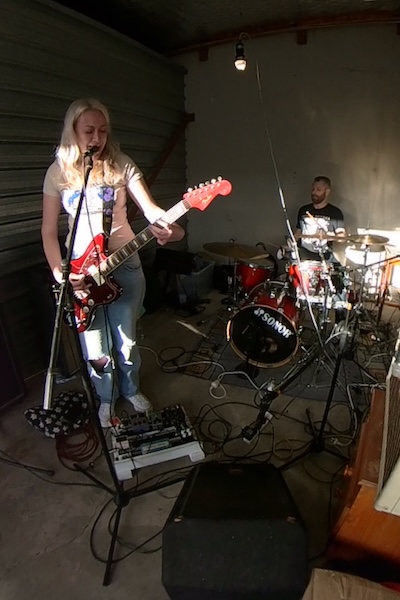
Split Enz. Crowded House. The Feelers. The Chills. Over the past 50 years, New Zealand has cultivated many bands that achieved an impressive amount of international success – especially for a country with only 5.3 million residents. Now, there’s a new contender from the island country, Dreamweb, that is seeking to join the ranks of those aforementioned titans.
Based in Wellington, Ian Moir and his partner, Tyley Burkin, formed Dreamweb in 2025 as band of the experimental noise/drone variety. But as the couple delved deeper and explored the possibilities of Dreamweb, they gradually incorporated hearty amounts of atmospheric doom and black metal.
Dreamweb kindly reached out to The Bad Penny around the time they released their debut single, “Call of the Void,” in mid-March. For metalheads, the song title might call to mind Denver’s now-defunct metalcore band Call of the Void or perhaps even death/doom-metal band Call ov the Void from Mexico. That is, until one listens to the New Zealand duo. Their sound is far more experimental, adventurous and diverse than those other two acts.
(Moir and Burki generously posted their single as a pay-what-you-want offering on their Bandcamp page.)
While we had a very pleasant chat with Moir, Dreamweb gifted us with something very, very cool: An exclusive conversation between the two bandmates that touches on pretty much everything you need to know about their band. Instead of presenting you with The Bad Penny‘s interview with Moir, we decided to defer to this rich exchange between him and Burkin.
Burkin: Dreamweb started as a very loose experimental noise project during late-night sessions at home. What were those early sessions actually like, and how seriously were you taking the project at that stage?
Moir: We weren’t treating it too seriously to begin with, we’d already started our other band Gnarling around the same time, which I guess was intended as a more serious endeavour, and Dreamweb was a vehicle for exploring ideas in a free and uninhibited way. Basically we were just starting a silly side-project in parallel starting to our main band.
Burkin: You initially built the track from a programmed beat and distorted synth before any guitars or vocals existed. Do you often start ideas from that kind of electronic foundation?
Moir: We started this project around the idea of abandoning our usual approaches to making music. I’m totally new to synth and was enjoying messing around with Tyley’s midi keyboard, and Tyley had mentioned she’d like to try making some electronic music…. so it’s kinda funny how after all that we completely circled back around to our regular instruments. But I don’t think we would have stumbled into making a track like Call of the Void if we hadn’t taken that convoluted route.
Moir: Tyley’s guitar and vocal parts were recorded as quick scratch takes that ended up becoming the final versions. As someone who normally refines and reworks parts extensively, what made you decide to keep those original performances?
Moir: There was just no reason to. After I deleted my programmed parts and recorded new drums and bass the song immediately felt complete. There didn’t seem any need to try to re-capture that lighting in a bottle… and it’s just way cooler to know you’re hearing something the first time it was ever sung, right?
Burkin: Your background is in black metal, death metal and grindcore, but Dreamweb came out of a much more experimental starting point. How did those heavier instincts shape the final direction of the song once the drums were added.
Moir: I was probably inclined to escalate the build of the song to a higher extreme than it might have gone otherwise. There’s a crossroads at about the three-minute mark in the song, where we could either dissipate the long tension we’ve built up, or lean in further and push it over to boiling point… and I can never resist going for a huge payoff like that.
Burkin: The project is hard to categorize, sitting somewhere between doom, shoegaze and more atmospheric forms of metal. Do you think genre labels are useful for something like Dreamweb, or are they mostly just a way to give listeners a rough entry point?
Ian: I think not being attached to a genre was key to this new sound emerging, so it’s tempting to try and shake off any labels, but there’s just too much music out there to not attempt to categorize your music in some way. It’s an imperfect system, and the sub-sub-genres can get a bit silly… but unfortunately if you don’t narrow down your audience and give them some reference points, you might not reach anyone at all.
Burkin: This song seemed to redefine the direction of the project almost instantly. After finishing it, what did it reveal to you about where Dreamweb might go next?
Moir: Call of the Void only took 8 weeks from initial writing session to release, so we’ve got some momentum right now that could carry us into a follow up release pretty soon. I feel like we have a much clearer idea of what feeling we want to invoke with the music, and of what’s possible with this configuration.
Moir: What emotional place were you in when you wrote the lyrics, and what feeling were you trying to channel through the vocal delivery?
Burkin: Emotionally, the lyrics come from experiencing a series of slips in connection to reality, and feelings of dissociation. The helplessness that comes with those feelings, the lack of control and the desperation are what I’m hoping come through in the vocal delivery.
Moir: When Ian played you the version with the live drums added, what was your reaction? Did it immediately feel like the project had shifted into something different?
Burkin: When we set up to work on the track, we had something very different in mind to what we ended up with, but I think it’s good to keep that flexibility and not be too committed to a sound in particular. I didn’t realise Ian hadn’t liked the track with the original programmed drums that much, I had thought it was interesting because we had each counted the beat differently and it made for an odd timing but once he came back with the new live (organic? What word would I use here?) drum recording, it took on a whole new life, I think because maybe he had an emotional reaction to what was already there and followed that feeling with the new drum track, adding a new depth and weight to the sound of the song.
Moir: Your background is more rooted in post-punk and shoegaze. On this particular song, where do you think those influences show up in the atmosphere or vocal style?
Burkin: I don’t think those influences show up that much in this song to be honest, but the original intent was that this would be a more electronic track with guitars, even though that’s not where it ended up either! I’m not particularly good at working to a brief, I guess.
Moir: The guitar and vocal parts on the track are essentially the original scratch takes recorded in the moment. Is working that way something you prefer, and what do you like about capturing that kind of raw, live feeling rather than refining things toward technical perfection?
Burkin: I’d definitely prefer to try to get something from the first few takes. Especially with something like vocals, I just feel like even if they’re not technically perfect takes, an authenticity will be captured that you’d start to lose after doing the same thing ten times in a row. This is a pretty extreme version of that though, because these are the takes that were actually more of the writing process than a finished product. I think if I had done the vocals after hearing the drums, I would have potentially leaned into the metal aspect more but I think I’m a way it’s more interesting to have not done that.
Burkin: I remember feeling pretty uneasy, even though we were not far from home, the bush at night just has a spooky vibe to it. At one point we couldn’t figure out which way we had come from so there were genuine moments of panic in trying to retrace the path we’d taken. I think the video manages to capture a similar sense of dread that, hopefully, the song itself conveys.
Moir: Over the past year of making music together, how has your perception of Ian as a musician changed since you first started working together, and how do you think your different musical backgrounds and approaches interact when you create music together?
Burkin: My initial perception of Ian as a musician was that he is passionate and dedicated, maybe a bit of a perfectionist but that he is also really supportive of the other musicians around him and bringing their ideas to life. I wouldn’t say that that perception has changed over time, just solidified. Over the last year of working together on various projects, I’ve seen how he really focuses on what is right for the song, and playing to that in a truly collaborative way, while always bringing his personality to his playing. It’s really exciting getting to write and play with someone that is so inspiring to me.
Moir: The recording contains more simultaneous parts than two people could realistically perform at once. Do you see Dreamweb ever becoming a live project, and how do you imagine translating something like this to the stage?
Burkin: I think after we have a few more tracks ready, when we see what kind of direction the project takes, we could then look at how best to bring it to a live setting. I think we’d want to avoid the use of backing tracks though, so it would probably mean enlisting other people and/or maybe use of a loop pedal.
Moir: This track clearly leans into metal territory. Do you consider yourself a metal musician, or even a fan of metal, and what was it like stepping into that sonic space?
Burkin: I don’t consider myself a metal musician at all. I do listen to a lot of metal-adjacent artists though, and I think I may pull from some similar influences non-musically, like the occult, horror movies etc. so it didn’t feel like a huge leap into that territory.
 The Bad Penny (beta)
Leave a comment