From the Vault: Dr. Know (Bad Brains) and Brandon Cruz’s Guide To DIY Touring
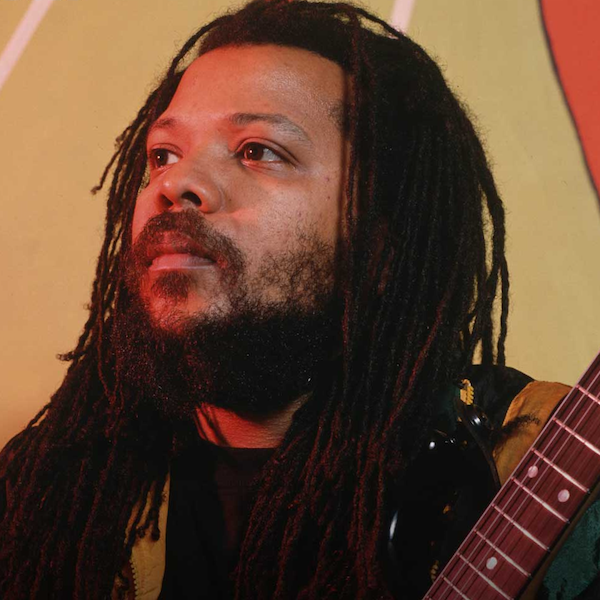
[This article was originally published on IndiePit in 2010.]
Punks don’t make the likeliest businessmen, for obvious reasons. Capitalism and punk aren’t exactly synonymous – in fact, by definition, they’re more or less contradictory.
But funny things happen in a time of crisis.
These days, more bands are taking more matters into their own hands, whether it be issuing their own material (like Clutch), producing their own records and/or shooting their own videos. But while this trend has mostly arisen out of necessity – the mother of invention, as the saying goes – self-empowerment has historically been a brass ring of sorts for bands adamant about maintaining control over their artistic output. Now they’re managing to find an opportunity in crisis: complete creative control.
So, in that case, why not take it a step further? You’ve got ProTools, a badass MySpace page, your own cottage record label, profiles on a slew of social-networking sites … what’s stopping you from doing it all yourself?
Enter Dr. Know, a band that has – to put it mildly – learned a few tricks of the trade since forming in the early ’80s. Collaborator Brandon Cruz (also of the reunited Dead Kennedys) is making good use of that wisdom, eschewing third-party promoters and booking agents, and taking it upon himself to sort out his band’s road plans.
A big, burly, unmistakable rocker, he’s probably the least obvious businessman you’ll find – but from the way you hear him talk, this is one guy who has it all together.
“Back in the day, we didn’t have the technology, and we shoo-shooed the business part,” he told IndiePit last month, shortly after a seven-week stretch of gigs in Europe. “As much as we dislike the fact that it’s turned into a business and can be work – it is – we need to be able to play to the biggest audiences with the most people and sell the most merch.”
So Cruz – who doesn’t smoke or drink (extra credit: he doesn’t eat red meat either) – is making the most out of a crappy climate in the music biz, taking it upon himself to book Dr. Know shows, overseeing merchandise sales and beyond. After all, these days, it’s the touring and merch that pay the bills.
But making phone calls and finding people to hand out flyers and the like actually isn’t as dreadful as it sounds. In fact, Cruz is actually finding a silver lining: “I got a pretty good gig here. It’s not a 9-to-5 thing. It’s like a paid vacation.”
You’re probably asking, “So how does a punk-rocker play the part of businessman, exactly?” Lucky for you, IndiePit was wondering the same thing. So we asked Cruz to rattle off a few ways a band can truly make it “on their own.”
1. Facebook. MySpace. Duh.
2. Aim for all-ages gigs (at any venue or town) if you’re swinging through the Midwest. When touring in small towns and rural areas, “If you’re not playing an all-ages gig, you’re losing a lot of audience members,” he says.
3. Foster new generations of fans. “The first version of the band, ’81-’83, when hardcore punk was still going strong, that’s when we made a dent in that scene.” But over the course of the subsequent 12 years since Dr. Know got back together, they drew a new set of young fans, and now they’re playing to a third, even newer generation of kids – some of whom have never even been to a gig before. “Hopefully they’re going to be long-term fans,” he says.
4. Broaden yer appeal. Dr. Know started out as a punk band, crossed over into metal, have grindcore influences, you name it. “You can’t categorize us. Right now if someone says, ‘Dr. Know is metal, Dr. Know is punk,’ we’ll do a grindcore song, like the new one on our [2008] Killing for God album called ‘Program the Man.’ I’m into country right now,” he even admits, crediting his wife and 9-year-old daughter. “We play with metal bands and New Wave and metalcore and crust and hardcore punk and old-school punk, anybody. We’d even play with a Journey cover band if it was fun.”
5. Go on the road “the right way.” Which is to say, be efficient. Take as few people with you as can, as little equipment as necessary and as much merch as possible.
6. Tour your heart out. “If you’re not stopping every night and playing, you’re losing,” says the 47-year-old who recently played 26 gigs in 24 days.
7. Carpe diem, dude. Got a gig at night? Why not make the day twice as nice with an afternoon show? Skate parks are ideal if ollie-ing is your thing. Dr. Know drew a few hundred at a skate fest in Nebraska and a skate park in Oklahoma – places they normally wouldn’t be able to attract a big crowd. And don’t forget record shops – take advantage of the ones that are left. Recalling a pair of gigs in Denver, he says, “It’s hard on the voice, but you gotta get to as many people as possible.”
8. Repeat after me: merch. From old and new records and CDs to pins and buttons to tees and posters, make sure you’re locked and loaded. “They all want to buy a little piece of you,” he says.
9. Take notes. Keep track of which venues and supporting acts work best for you.
10. Don’t be late. “Try to get there as early as you can. Check out the opening bands. Meet them and lay the foundation for the next time you come to town.”
11. Remember, you’re the boss. “Promoters forget that we can get a generator and go out into the bushes somewhere – an orchard, someone’s private property – and we can throw a gig. We don’t need clubs. They need us – to sell food, alcohol or whatever they do, generate money at the door. Some of these promoters forget that, and you’ve got to have some business experience to deal with them.”
12. Use technology – but use your head, too. “It’s not just get in the van and go,” he says. “We have a GPS and laptops on. I have my computer with me all the time. I have an Excel spreadsheet to write down attendance. And merchandise sold, to the size. [For example,] if I know a town has a lot of – guys, the football guys – we’re bringing more XXLs.”
Still, he qualifies: “You can’t rely on the Internet. For every 10 people who see something on the Internet, maybe one will go. And that’s a really good percentage. Promoters that just rely on the Internet and are shocked that only 50 people showed up. What did they expect?”
13. Do your research. Read up on who also recently played at the venue that is so graciously accepting your presence. Figure out which opening bands would get the best reception in that town. Evaluate which other bands are playing in the town you’re in that night, to see who you’d be up against. “A lot of times there’s some really good playing at bigger venues near where you’re at,” he says. “If it’s sold out, people need somewhere to go, so we’ll get the promoter, or we will go ourselves, and hand out fliers, for example, in front of the venue. You gotta get people on the street.”
14. Socialize. Call bands that recently played in a town you’re hitting, to get a feel for it. Get a handle on whether you should prepare yourself for “skinheads or other problems,” he says.
15. Think ahead. “Clubs and venues, and even some of the smaller venues, tend to get booked about three, four months in advance,” he says. “So right now, we’re looking at September/October in Europe. And it’s also a good time to start laying down the foundation for late October/November for East Coast. You can never book too early.”
“Call clubs 20 steps in advance,” he says. And also gather information about the “bands that live in the towns, the bands that are opening for you.”
16. Know your audience. “Sometimes you can be coming into a town where [the younger fans] can’t even afford two gigs in a month. Kids save up for one show.” Know better than to play in a small town where two other bands recently played.
17. Couch it … Dr. Know almost never do hotels – they usually crash with one of the opening bands or someone in the audience. “We usually have connections with a lot of big cities, because [either the Dead Kennedys or Dr. Know have] been through them before,” he says. “Going to Chicago, we had a ton of friends there, and Detroit, Cleveland, Denver … when we announce that we’re hitting the road, usually on Facebook or MySpace, we’ll get e-mails saying, ‘Hey, if you guys need a place to crash …’ “
18. … but pick the right couch. “We rely on the kindness of strangers sometimes, and that can turn out to be a really cool thing. But sometimes it gets kinda sketchy and you get to a flophouse with a bunch of drunk really fucked-up people. And you say, ‘Thanks, but …’ You have to be as nice as possible.”
He adds, “If there’s any drugs whatsoever, we’re out of there no matter what.”
19. Branch out. Even sweeter, Brandon is a member of a skateboarding tribe called the Jaks Team, which has been around for 30 years. Through that brotherhood, he’s got a pal in almost every major town. “Everybody skateboards together, everybody listens to music. It’s a good group to be with, because it’s a built-in audience, and they know everyone in town. They tend to be the loudest and most obnoxious people in town. But the good outweighs the bad. It’s more of the laughing aspect of it than a detriment.”
20. Tolerate intolerance when possible. “We basically toured the Bible Belt this last tour,” he says. “And that was really eye-opening, that there were … more churches than there were people in most of the places we went through. Then you get to Chicago and couldn’t find one to save your life, if you needed one.
“You get to see the racial divides of the country. One of the guys in the band has hair down to his waist, another guy has red/black hair. We get out of the van in Tulsa, and it’s like a UFO just landed. There were a couple of dicey situations.”
21. Act globally. “We’ve done Mexico and Canada, so I guess we’re an international touring band now,” he says. Australia and Japan are on next year’s itinerary.
22. Keep your chin up, bud. “You just play it by ear. You gotta really roll with the punches. Sometimes you get punched pretty hard,” he says. “But you gotta keep going.”
23. Give it your all. “The more word gets out that you put on a quality show, you give 110%, you make the audience as tired and sweaty as you are …
… well, you’ve done your part.
 The Bad Penny (beta)
Leave a comment