Reverse Yr Curse Refuse to Accept Alienation, Self-Destruction as Their Fate
It seems like a very flawed and distinctly American – or perhaps conservative Christian – way of thinking that a curse will never again rear its ugly head or inflict terror upon innocent children and old ladies once it’s banished. What a fallacy. Look no further than bad music as a prime example contradicting this simplistic idea.
After Styx, Kansas and Toto seemed to have an unbreakable stranglehold on popular music, along came Bruce Springsteen, Tom Petty and the Replacements to slip out of the grasp of AOR assholes — kinda like how Hulk Hogan (sorry brother, you’re not getting an RIP from The Bad Penny) managed to wrangle out of the clutches of Ric Flair when all seemed lost.
Because Matthew Park grew up in a household in Fairfax County, Virginia, where music was largely absent and in which furtively flipping through his parents’ Dave Brubeck records was deemed “naughty,” his understanding of music wasn’t just myopic, it was practically nonexistent. Park can’t identify the moment of clarity when he finally discovered rock music – but he can vividly recall when music transformed him while he was surrounded by strangers.
“The first concert I ever saw was Mötley Crüe. And it was awesome,” he says during a recent video conversation. “This was also back during a time where, at least in my family and my friends’ circle, our parents didn’t really keep very tight leashes on us. We were free to roam. So that’s what we did. We got into hair metal, like Guns N’ Roses, and that quickly shifted into Jane’s Addiction and the Red Hot Chili Peppers.”
Hold your horsies before judging Park for swapping one curse (the sophisticated yet hardly iconoclastic Brubeck) for another (the misogyny of GN’R and Mötley Crüe), because – before too long – along came a band from Aberdeen, Washington, that truly upended the status quo and, arguably, launched the opening salvo against the white male hierarchy from the indie-rock set. Also worth noting is that, with the passage of time, we’re forgetting that Nirvana often humbly deflected attention and urged their fans to explore other underground artists.
The best case in point was Sonic Youth, whose popularity boomed thanks to Nirvana’s ubiquitous endorsements of their own idols, and, in turn, budding musicians like Park following their idols’ recommendations.
“Sonic Youth was probably one of the biggest discoveries for me when I was 16,” Park reminisces. “I remember being, like, ‘What is this? It’s weird and scary and I want it.’ “
Park then pursued the path you might expect – falling in love with the Fugazis, the riot grrls and the like. Along the way, Park amassed a collection of 700 records and began making his own home recordings when he was still in his mid-teens and living in his parents’ basement.
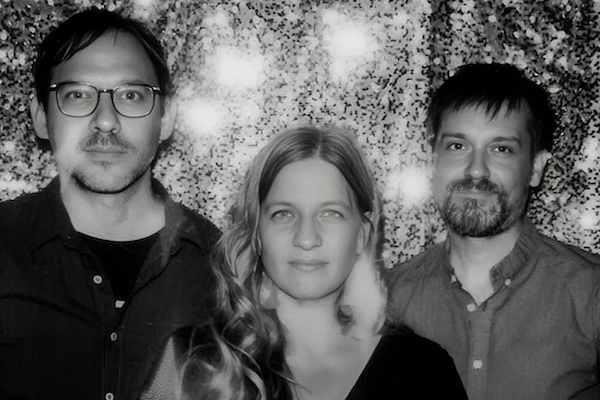
Which brings us to the most intriguing part of Park’s story. His band Reverse Yr Curse didn’t release their first LP (Where Are We Going and When Will We Get There?) until earlier this year. Questions abound – as he provided us with some answers.
For starters, because Park dabbled with unserious bands in his younger years, he shook off the urge to play music for the approval of others, and even the potential achievement of glory, at a young age. Second, he didn’t feel creatively in sync with another musician until he returned to his hometown after living on the West Coast and in Germany for a spell and reconnected with old friend Bret Payne, who handles drums and vocals for Reverse Yr Curse.
“We hadn’t played music together for like 20-plus years but decided, ‘Let’s see what happens if we play music together again,’” Park recalls. “He had a similar trajectory of going through punk but, when he got older, started getting into gentle Brazilian music, like Astrud Gilberto.”
Park adds: “And then Bonnie [Staley], who’s our bass player and singer, she really likes Joni Mitchell, Patsy Cline-era country-western, and pop music like Beyoncé. Between the three of us, our deepest mutual love is for Blonde Redhead.
“We got together and jammed once, playing some weird kraut-rock jam, and once we got that down, we knew we could be a band. We enjoy juxtaposing a softer voice against heavier music – an angular, jagged kind of thing, but with this very beautiful, soft singing on top,” Park says.
Perhaps more than most musicians, what gratifies Park these days isn’t just that he’s a musician but that he’s sharing the experience of learning and crafting his art with companions whose company he enjoys on a deep level. Remember, he came from a home effectively absent of music, and while he did have friends as a kid, the act of discovering music for him was very much a personal endeavor, at least initially.
“People growing up today, I think, are having a much easier time talking about their feelings than I had when I was growing up,” Park discloses. “My parents didn’t talk to me about feelings. I never learned how to process my emotions at all, so I immediately went to drugs as a way to cope with my own problems. … [And yet] I need solitude and isolation to have the time and space to explore my own creativity. I’ve also struggled for decades with very serious depression.
“But being in a band is beautiful because we speak an unspoken language when we’re playing,” he continues. “If we get into a jam that’s really working, that’s great, you know? Or f I come up with a guitar part or lyrics at home and I bring them to the band, I can trust them to put their little magic on it and make it a more vibrant and more interesting song. Collaboration always has its difficulties, but that’s like with any relationship.
“By and large, I think being with people, being with community, is probably the right thing to do.”
Photo courtesy of Amy Robison
 The Bad Penny (beta)
Leave a comment