From the Vault: Everclear’s Art Alexakis Recounts Every Detail of ‘Santa Monica’ While Revisiting the Place That Inspired the Hit Song
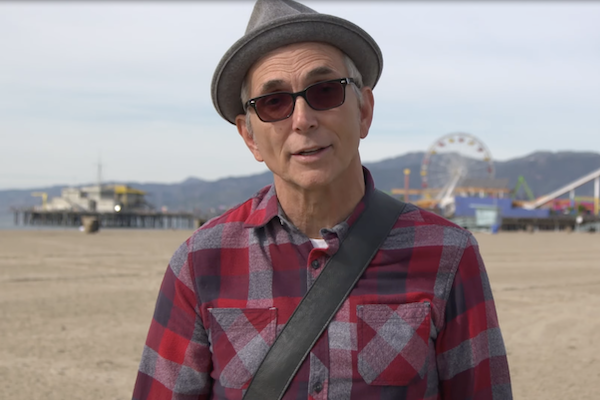
Fifteen years ago, yours truly – while serving as Editor of Santa Monica Patch, a hyper-local news website owned by AOL – was fortunate enough to rope in Art Alexakis, frontman for hit-single machine Everclear, for a special interview. The premise? Our conversation would revolve entirely around the alt-rock band’s biggest song, “Santa Monica,” and be conducted as we walked along Palisades Park, which overlooks the setting where the song took place and what inspired him to write it.
For such a seemingly simple, radio-friendly song, Alexakis revealed that there was a genuine, heartbreaking story behind it. He spared nary a detail about “Santa Monica” during our 90-minute journey together; while the song’s lyrics consist of about 300 words, our conversation – presented in its entirety here, for posterity’s sake – totaled more than 5,100 words.
Everclear completists and pop fans curious about the stories behind some of the best-known hits in the past three decades, prepare for a quasi-extension course revolving around a single song and taught by one of the best alt-rock lyricists of the ’90s. We’re rolling it out in celebration of the 30th anniversary of Sparkle and Fade, on which “Santa Monica” appears; the 15th anniversary of our interview with Alexakis; and as Everclear tour into early November in commemoration of the former anniversary.
[Sadly, the photos taken during this interview are buried somewhere … if and when they can be located, they’ll be added to this post.]
Let’s see if we can find a bench around here. I was at this comedy show last night … swingers conversation extends …
I don’t think funny is a thing you can learn. It’s like writing songs: You can teach someone structure and theory and all sorts of stuff, but either you have the ability to come up with melodies, or you don’t. It’s like anything: You can learn the craft, you can’t learn the art. It’s either inherent, or it’s not.
Do you think it’s becoming harder to identify those people with the climate we’re in, the fact that everyone has access to the tools?
I think that’s a good point. I think it’s becoming hard to differentiate between art and craft, because you get so little art and so much craft, it’s hard to tell … the line gets blurry with where it starts and where it ends. That’s my opinion. Music-wise, I hear some really stuff, and I hear some really just banal, mediocre stuff [by] people trying really hard to be different. Doesn’t sound different. You know what I mean? It’s like, “You’re trying too hard.” And the same thing with film. But every now and then, something great comes, and you gotta [say], “Well, someone’s doing what they want, and someone had the guts to believe in them.” I’m not talking about “Santa Monica.”
Well, also that you have a producer’s ear. That must help in terms of discernment and knowing how to be selective and knowing how to identify what’s working and what’s not.
From that point of view, yeah, as a producer. When I really started producing … I mean, I produced all our stuff and wrote, directed the lion’s share of our videos. So I do. I tend to dissect things and take them apart and go, “Oh, that’s a cool effect on the drum” – instead of listening to the song. I’ve gotten away from that. I got away from recorded music for a couple of years … I took a break from Everclear for a while. We still did shows, but like, really putting myself into … like, this is my vehicle, my creative outlet, this is what I want to do.
I went through a lot: My mom died, I went through bankruptcy, I went through a divorce. The divorce wasn’t bad; it was hard, but it’s just because everything was hard at the time. And a friend of mine died. Right all, like, within a month. It was a hard month. I’m like, “Oh, here’s my midlife crisis, I was wondering when it was going to come. Awesome.”
Came with a bang.
Yeah. But I had a daughter – my daughter was 12 or 13, which was a difficult age. Now she’s 18. So we got through it.
So if I’m doing my math right, that was about six years ago, then, 2004. That was also probably around – well, it was around 10 years after Everclear really got big. So maybe it was time for a breather? It was about a decade into your fame.
Yeah … let’s see … close. Yeah, it was about a decade into it. We started getting famous about … the song “Santa Monica” hit – nice segue – that was released to radio in, I think it was May of 1995. Actually, no, that’s not true.
I thought the first radio play was December 4, 1995, and that it was not an official single.
No, it started earlier. Let’s start this over: Santa Monica was released as a single, I believe in August. You can do the due diligence on that. I believe it was released in August. Our first single was “Heroin Girl,” and that was released in April/May. And the record came out in May, Sparkle and Fade. And people were afraid of the song. The markets that played “Heroin Girl” were … it did really, really well. But there was only, like, 15 markets that would play it. ‘Cause the South was just afraid of the word “heroin” in a song. The South, a lot of Midwestern radio stations, were afraid to play a song that said “heroin” in it.
But we toured all summer, and we worked really hard. We went back to the van. We toured with a band called Sponge that had a big hit. Then we went on tour with a band called Filter that had had a really big hit, and we released “Santa Monica” through the fall, and we toured and toured and toured. And it did OK; it went up to about 15, and then it started slipping down.
And then we just kept at it and kept at it, and did radio shows and all this stuff, and just worked really hard right up until Christmas, and then it started climbing the charts again. And then it got up to about – I forget what it was, I know we were selling around 6/7/8,000 a week before Christmas, and then there’s a period … and then we got added to the Buzz Bin. That might be a little bit before your time.
No, no, I remember …
OK. So we got added on Christmas Day, and we still didn’t find out what we had sold over the next few weeks, and then we found out that we had sold 35,000 records in one week. We had gone from 6,000 to 9,000 to 35,000 and just exploded. And so the next few weeks, it just stayed up in the 30s, and it was like, “You guys are going to get a platinum record.” Wow. I didn’t expect that. I was like, “Well, if we can sell a couple of hundred thousand, we won’t get dropped. That’d be cool.”
—
“One day we filmed [the ‘Santa Monica’ video,] they put me in this Houdini contraption where I’m swimming, but it was ice-cold water, right? And I got hypothermia. I had doctors coming to my hotel wrapping me in hot towels and blankets, and I’m like [shivering]. And then the next day, we went out to Burbank to film the other stuff in 110-degree heat. Just a rough video shoot.”
-Everclear’s Art Alexakis
—
So the success of Sparkle and Fade was really contingent upon …
The success of “Santa Monica.” Oh, absolutely.
Why that song? Why did you keep pushing that one so hard?
Well, the label believed in it. People responded to it; it was one of those songs that I could play one time, and people would just go [a-ha] … and just focus in on it. It’s simple; the melody’s simple, you can hear the quality of my voice – if you like it or not – and people seemed to glom onto that.
It’s funny, we filmed the video for “Santa Monica” [he points north] in Malibu.
No way.
Yeah. If you’ve seen the video, there’s us in the ocean, and it’s the same cave that they used in “The Usual Suspects,” I think.
Where they killed the guy?
Yeah, where they kill the guy, drop him at the beach. One day we filmed out there [he points], and they put me in this contraption where it was like a Houdini contraption where I’m swimming, but it was ice-cold water, right? And I got hypothermia. Like, literally had hypothermia. I had doctors coming to my hotel wrapping me in hot towels and blankets, and I’m like [shivering]. And then the next day, I had to go – we went out to Burbank to film the other stuff in 110-degree heat. Just a rough video shoot.
The lengths you’ll go for a music video …
Well, they were like, “Do this,” and we were like, “Uh-huh, oh, OK.” Like an Irish setter. But it was exciting. We left the video shoot; got on a plane; flew right to Phoenix, Arizona; the promoter met us at the show, we were 35 minutes late to go onstage. We get there, and there’s 700 people losing their mind, and we walked onstage and it was just, like, people just freaked out. It was, like, “Wow, so this is what it feels like.”
That was the same day?
Yup.
So how many days did the video shoot take?
Two days. One day out in Malibu and then one day in – I believe it was Burbank. But it was really, really hot.
There used to be so much money and effort put into videos back then.
That was a cheap one for the time. That was, like, 80 grand. They weren’t going to spend that much money on the band. They thought that that was the big song. There really wasn’t that much support for us higher up at the label, at Capitol. It was the people who were underneath, working the record, that saw the response that people were getting from it.
Like, when it got played in this market, it sold records. And that’s called being a “reactive record.” It’s still like that to this day. It doesn’t matter how many reviews you have, it doesn’t matter how many critics think you’re cool: If your record doesn’t respond when people listen to it and make them want to buy it, then you don’t have a record.
I don’t remember labels giving bands such a long opportunity to sell a song. It was usually, “You’ve got a few weeks, and if that thing doesn’t stick, move on to the next one.”
Pretty much.
With “Santa Monica,” you were giving it as much chance as you could to make it connect. How did you get that much leeway over those months?
Well, because basically, we showed them – and I was persistent, my manager at the time was persistent, and we were just, like, we wouldn’t go away. My A&R guy was persistent. I’m sure people higher up are like, “This isn’t happening; let’s go on to whatever’s next.” But, one, I think Capitol didn’t have all that much going on; they had bands – they were signing bands – but they didn’t really have anything right then and there.
And I think, like I said before, when Gary Gersh, the president, went out speaking to SIMA – which is now EMD, but it was the distribution wing of Capitol/EMI – and when he’d go out and talk to SIMA, and he would do these big things and show pictures of the new bands coming up and play a little bit of music and talk to all the rank-and-file – every seminar he did, someone would stand up and go, “Why aren’t you talking about Everclear? Why aren’t you talking about Sparkle and Fade?”
People started applauding … he [was like,] “Well, they’re a band in development, and we really think there’s going to be big things for them.” They’re going, “No, there’s no band in development; they’ve got a hit record. Why aren’t you working this record? Why aren’t you telling us to work this record? Because when people ask us what we got, I give them Everclear, and they respond to it.” I mean, I had people sending me videos at the time – which was really hard, because they’d have to send it on VHS …
… in a padded envelope …
Totally. I’d get those, and then I’d use that as ammunition to go to the label and go, “I need money to do this. We need this.” And my manager was doing it. So we were relentless. People at the label were relentless. And our radio guy at Capitol never stopped believing in the record at all. His name was Phil Costello, he was the head of radio production. He never, ever gave up.
We did a show down here on the beach for KROQ [he points to the beach directly ahead]. There was, like, 2,000 people here on the beach of Santa Monica. Great promotion, right? And then I think that even after that show, I think KROQ dropped the song. And then, in December, they added it back again because people were asking for it. And it was working elsewhere, it was starting to work up the charts.
It’s funny, because … I got a great story: When “Santa Monica” became a big hit, and we did a tour with us and this band that no one had ever heard of – management sent me a single, and I was, like, “That band’s going to be huge.” And it was No Doubt. So they were opening for us. And we went out on tour, and it was our first tour that sold out. Like, every show sold out in an hour. Boom – move to a bigger place. Boom – sell out, move to a bigger place. Boom, sell out. When we were working our way to the West Coast, they’re like, “Do you want to play the Greek? Where do you want to play?” And I go, “Nope. I’ll play the Santa Monica Civic.” And they’re like, “Really?” I’m like, “Oh yeah.”
I grew up going to the Santa Monica Civic to see bands. I saw Black Sabbath, I saw Jethro Tull, I saw The Cars, I saw Cheap Trick, I saw Rush. Every big band that couldn’t fit into the Forum would play here. So it was a dream of mine to drive up, see “Everclear: Sold Out.” That’s what I wanted to see – and I got to see it. It was awesome. Didn’t sound so good.
No?
You hit a guitar chord, and it just goes, “ga-ga-ga-ga.” It’s all concrete. And it’s not as big as I thought it was. When you’re a kid and you go to places, you think, “Aw, this is awesome.” And then, when you’re onstage, you’re like, “Oh, really? It’s a lot smaller.”
When was that show?
It was more into March of ’96. It was really funny, because that day, someone from my management called me and said, “Two things. Well, you’ve got a guest list you’ve got to go through. Can you come in and look at the guest list?” And I go, “Come all the way into Hollywood to look at a guest list? Just tell me on the phone.” She’s like, “We can’t, Art, it’s too long.” “Well, fax it to me.” She goes, “I can’t. I tried to, but the fax is too long.” I go, “What?!”
So I go into West Hollywood, and I get this thing, and it looks like the Dead Sea Scrolls – literally, it scrolls out across the floor. I’m like, “Who are these people?” And I’m looking through it, and I’m looking through it, and I go, “Jamie Hernandez? We were in the fifth grade together at Grant Elementary in Santa Monica. Really? Yeah, right – I’m going to put you on the guest list? Who are you? I don’t even remember …” And then I see this name, and I go, “Ray Goldman. Goldman … really? Where do I know that name?” And I figured it out: Ray Goldman was the guy that was sleeping with my girlfriend when I got arrested at the Ted Nugent/ Scorpions concert for buying acid. And he spent the weekend with my girlfriend while I was in jail. And my crew’s like, “Call him. Tell him to meet you somewhere for a cup of coffee.”
Did you?
No, no. And he tries to Facebook me all the time, and I’m like, “Dude, stop. I don’t want to be your Facebook friend.” “God, it was 30 years ago, why are you holding a grudge?” “Because I didn’t like you then; why would I like you now?”
It was 30 years ago – why are you still bothering me?
“Let it go.” Anyway, the day that we had the show, I had gotten these calls from my management to go … Scott Weiland was in rehab down in Marina del Rey, and that was the place that Kurt Cobain had left before he killed himself. And I knew it because it used to be a little hospital, and I used to go in there if I got drunk, cut myself with a knife … like, on my 20th birthday, I was chopping cheddar cheese and I [motions as if he’s accidentally cuts himself] … I’m not the sharpest knife in the drawer. Anyway, he wanted me to come talk to him, because he had heard my music and knew I’d been through a lot of drug issues and stuff. So I went and talked to him and met with him, and I was inside this rehab place – and I had been there before; I had been to places like that before … they’re all the same: They all smell the same, they all look the same.
And I was just really depressed when I was there, and I drove away from there just, like, bummed. And then I was thinking, “You know what? I’m driving away from there. I don’t need to be sad.” And as I was driving on the Marina freeway, I could see the housing project that I grew up in off on the left, and I’m like, “Wow, man, that’s weird.” [He chokes up.]
And I turned on the radio, and just as I turned on the radio, they go, “This is a sold-out show tonight. This is Everclear with ‘Santa Monica.’ ” “Santa Monica” came on, and it was, like, an MTV moment. It was totally a Lifetime, made-for-TV … and, I’m, like, driving, crying, listening to my song on the radio. “This is the #1 song on KROQ right now” – that’s what he said. So it was a pretty cool moment.
You’ll never forget that.
I won’t. It’s cool. And here we are, 15 years later, sitting here, looking at the beautiful sea.
Yeah, it’s the 15-year anniversary of the song.
Is it? Man, I’m old.
So tell me about that KROQ show again: Was it just you guys playing?
No, I think it was a couple of other bands that we were on tour with at the time. But it was pretty much about us, and they shot it. There was a big, inflatable KROQ sign there. It was literally [he steps to the fence] it was either right there or right there.
I’ve seen pictures of it – people have sent me pictures of it – you can find pictures of it online.
And it was just a whole bunch of people. But yeah, that was in the late summer/early fall, when the record, when they were going, trying to get it up the charts the first time. It was a slow climb. We’ve always been like that, though. We’ve never … you were correct when you were saying, “Usually, you throw it against the wall, and if it doesn’t stick, it’s on to something else.” You don’t come out with a big first week, they just move on. And when our next record came out, it came out OK, but it wasn’t huge, but it never went away. So Much for the Afterglow – instead of selling 150,000 records one week and then going down from there, we’d just get 25-30 for a year and a half. A week. Which is pretty good.
It’s hard to even convey anymore to people who are new to music what those numbers mean.
They don’t get it. ‘Cause if they look and see what … number five on the charts is selling, like, 27,000 records? That wouldn’t even get you on the charts – in the top 100 – back then.
There were gold albums every week.
I had a friend who was in the hip-hop industry, and he was, like, “Man, if you get a gold record, that means you don’t get dropped.” And I was, like, “OK, we’re building.” But, like, three gold records in a row? They’d move on. That’s how it was back then.
Going back a little bit, tell me about writing the song, where the germ for the song came from, even bringing me up to the recording of the song as well.
Yeah, OK. Well, we had gotten signed to Capitol. I was living in Portland, Oregon. And we went out on the road on a really horrible tour – but it was our last really horrible tour. The different thing was we had all this money in our pockets. Like, our management was sending us traveler’s checks. They didn’t know how to tour. And this was before ATMs were really big, right? They were just sending traveler’s checks – I had, like, $1,500 in traveler’s checks. And I’m a guy who, like, we used to go out on tour – maybe six months earlier – for four bucks a day or 10 bucks a day. Two Happy Meals. Two Value Meals. That was it.
I came home, and my wife and I and our 2-year-old moved into a rental house – but a nicer place than where we had been living – and me and the band went down into the basement and soundproofed it with egg crates and foam and stuff like that, carpet, to be a rehearsal studio and to work on songs for the record. And at night, I would write songs, and in the day, we’d work them out in the basement.
I was writing a bunch of … I had written some songs and was figuring out what songs should be on the record. And I had total creative control; I was going to produce the record. That was one of the things that Capitol gave me.
That’s amazing.
Well, I had 22 when … they all circle like vultures, and then, when one goes, they all go. So we had, like, literally, 22 offers in L.A., 17 offers in New York. Right? So I came to meetings here, and I’m like, “This is what I’m looking for money-wise.” And they’re like, “That’s not bad. That’s fair.” “I want this many albums, I want tour support, I want this, I want this to cross-collateralize.” They were like, “Oh, this guy knows the business. OK, that’s all cool.” “Oh yeah, by the way, I want to have total creative control, I have the last word on everything, and I get to produce my own records.” And it was just like, poof! “Where did you go? Everyone disappeared.”
Short of asking for the masters, that’s …
Pretty much. Reversion of masters? Yeah, well, that was not even going to be … now people talk about that, but that even doesn’t happen today.
But yeah, so Capitol was fine with that, and we did that. And I’m in the studio, I’m in the basement, working on songs during the day; at night, I’m writing songs. And there’s this one song, I had this riff – it was really simple, I had this melody, and I wanted it to be about comfort zones. I’m living in Oregon, suffering from – I’ve always suffered from anxiety or depression, one or the other. They’re both the same thing, but … and I just really felt, I missed living by the ocean. I grew up here. And it’s funny, because there’s some people that say there’s some sort of ionic energy when you’re near salt water. And I just feel more comfortable by the ocean. [We get interrupted by someone walking by.]
I wanted to write a song about getting back to your comfort zone – whether it was a physical thing or an emotional thing or a mental thing. And I wrote it about just getting back to the sunshine and palm trees and this and that. And when I thought of that, I thought of this. Even as a kid, my dad [and mom] would take me down here when they were still together. Take me to what was called the Santa Monica Mall, which is now called the Promenade – I saw Santa there. That’s where I went to go see Santa. There’s pictures of me in cowboy boots with hair slicked back, pretty cute.
And I was writing the song, and I knew I wanted it to be about Santa Monica, but there’s nowhere that I felt inclined to put the name “Santa Monica” into the song. Nowhere in that song does it say “Santa Monica.” But it just epitomized what was my comfort zone and what was home to me, and that was this. And I couldn’t epitomize it better. And so I named the song “Santa Monica.”
It’s really funny, because when my …
I was just going to say: Not only does it not say “Santa Monica” in the song, but there’s very little in the song that would even give you any indication that you’re at a certain ocean or a certain beach. It’s general, even though it’s specific for you.
Yeah, it is general. But it’s … well, that’s what it’s about. I think art is specific to the person who’s doing it. Great art is art that can be specific and personal and private and selfish but other people can glom onto it. You can go look at, like, “Starry Night” by Van Gough, and you’re just drawn in. He was just representing what he saw. That’s where the best art comes from: It’s from a totally selfish place. And that’s what the song was about.
But the whole anthemic chorus of, “We can live beside the ocean” and “watch the world die,” it’s just, like, this total romantic manifesto of, like, “I don’t care about anything else. I care about you. I care about me. Let’s be one and just let the world go to hell.” That was a big deal. I wrote that song, my wife was like, “Wow, that’s so romantic and schmaltzy.” And no one else ever made that – well, she’s just mean. But I think it’s beautiful. I think it’s a beautiful sentiment. I thought, “It rhymes, they’ll really like this song a lot.”
But it’s funny because my A&R guy – you know, I didn’t send demos, I didn’t do that – I’m like, “If you want to come up and hear most of the songs before we go into the studio in two weeks, cool. Come up now.” He came up, sat down in our basement, got him an Arnold Palmer, he’s sitting there, listening to it, and as we were playing songs, he was like, “That’s a good song. I like that song. That’s cool. Um, that’s all right.”
And then we played “Santa Monica,” and he goes, “What do you call that song?” I go, ” ‘Santa Monica.’ ” “Play that again.” And I play it again. He goes, “That is almost a hit song.” I go, “Almost a hit song. What do you mean?” He goes, “It’s missing something. It’s a phenomenal song – the chorus, the riff, the melody, the story, it’s just great. I need more.” “More what?” “I don’t know.” “Well, then, shut up, if you don’t know what.”
And was that the finished version?
Well, no. It’s a good story. So he goes back to L.A., we go to record the record. I go, “Wait till it’s done, you’ll get it.” We recorded everything. He comes out to Smart Studios at the end and listens to everything. He goes, “That song is a” – talking about “Heartspark Dollarsign” “that’s a second single. That ‘Heroin Girl’ song is a great first single. This song is the song that’s going to break the band – but it’s not quite there.” And I go, “Well, what do you want? I don’t get it.” He’s like, “I don’t know.”
And then he goes away, and I go, “Well, we’re going to mix it.” So we go to New York, mix the songs, he comes out – same thing. And finally, I just, I’m like, “Go to hell.” I’m just, like, “This is it. This is the song. I’m giving you the song.” And we’re all adamant, like, “Oh my God, he wants us to change our song.” And he’s like, “Just make the chorus longer, give me more chorus.” And I’m like, “I don’t think it needs any more chorus.”
And so we were at an impasse, and we’re talking on the phone, and we’re actually, like – we got abusive with each other, we were using the F-word. And then I wrote another song. I wrote a song called “You Make Me Feel Like a Whore.” And I did it, and I actually just told him, “You know, I wrote a new song, it’s called ‘You Make Me Feel Like a Whore.’ ” And he’s like, “If something I could say or die could inspire you to write a great song, then well and good.” And I’m just like, “Go have some tea. Shut up.”
And then I actually wrote the song – I wrote the song called “You Make Me Feel Like a Whore,” ’cause I’m like, “That’s a pretty good title.” And it started making me think about relationships and this and that. It really wasn’t about that with him, but that’s where the title came from. And finally, I go, “You know what? I get two more songs to record. I want to record two more songs for the record. This ‘Heartspark’ song, this acoustic song [not sure if that’s right], ‘Strawberry’ fleshed out a little bit more, I need to do this and this. I’ll go in, and I’ll try to make the song longer.” And he goes, “OK. I’ll give you the budget.”
So “Santa Monica” was under three minutes at that point?
Yeah. So I go in, and we actually just cut the tape, put another chorus on there, I re-sang it, took it up higher – put a droney guitar. We just made it, and he listened to it, rough mix and all, and he’s like, “That’s it. Now it’s right. It scratched the itch. Before, it wasn’t scratching the itch.” I’m like, “OK, all right.” We’re like, “Well, I don’t hate it. It’s … OK. That’s fine. I thought it was fine the way it was. I still think it’s fine the way it was. But I’ll live with it.” So anyway, then it goes on to be this big, huge, worldwide hit, right? And he just won’t shut up.
About how he was right.
He still talks about that, I’m sure, when he does interviews, he still talks about that. Yeah, I mean, well and good. I don’t care. And it taught me to learn … it taught me a little humbling experience in a good way. And that I don’t know everything, and that I can benefit by listening to people. And if it works, it works; if it doesn’t work, it doesn’t work.
And you were producing at that point, so you really had ultimate control and probably needed an outside voice.
I did. When you get into writing, sometimes, don’t you just want to go, “Will you read this?”
Sure, absolutely.
And you got to find someone who will tell you the truth. So that’s good to have in your life.
I look back on it: It all happened for a reason. It was this slow burn of getting that song on radio; it went up, it went down, and then it went up again. But I really like the fact that I could write a song that epitomized the place I grew up, the place that helped make me who I was – good or bad. You know? And the fact that … there’s another couple of bands that have songs called “Santa Monica” now, and I’m like, “Really? You named a song ‘Santa Monica’?” “Yeah, I got a new song, it’s called ‘Stairway to Heaven.’ Check this out.” Really?
I was writing songs with a guy who had had a song [called that] on a record, and he had never told me that, and I’m like, “Really? You’ve got a song called ‘Santa Monica.’ Really? Really?”
Catch Everclear’s Sparkle and Fade 30th Anniversary Tour, with Local H and the aforementioned Sponge in tow, on these dates:
September 20 – Lubbock, TX – Buddy Holly
September 21 – Oklahoma City, OK – The Criterion
September 23 – Austin, TX – The Paramount Theatre
September 25 – Plano, TX – Legacy Hall
September 26 – St Charles, MO – Family Arena
September 27 – Kokomo, IN – Kokomo Concert Series
September 28 – Louisville, KY – Mercury Ballroom
October 3 – Pelham, TN – The Caverns
October 4 – Sugar Hill, GA – The Eagle at Sugar Hill
October 5 – Pensacola, FL – Vinyl Music Hall
Tuesday, October 07 – Orlando, FL – The Plaza Live
October 08 – Clearwater, FL – Bilheimer Capitol Theatre
October 09, – Fort Lauderdale, FL – The Parker
October 11 – Fort Pierce, FL – Sunrise Theatre
October 12 – Ponte Vedra, FL – Ponte Vedra Concert Hall
October 16 – Charlotte, NC – Neighborhood Theatre
October 17 – Norfolk, VA – The Norva
October 18 – Asbury Park, NJ – Asbury Lanes
October 19 – Huntington, NY – Paramount
October 21 – Boston, MA – Big Night Live
October 22 – New York, NY – Irving Plaza
October 23 – New Haven, CT – Toads
October 24 – Philadelphia PA – Parx Casino
October 25 – Washington, DC – Black Cat
October 27 – Cleveland, OH – House of Blues
October 28 – Cincinnati, OH – Bogart’s
October 30 – Indianapolis, IN – Egyptian Room @ Old National Cent
October 31 – McHenry, IL – The Vixen
November 1 – Minneapolis, MN – First Avenue
November 2 – Chicago, IL – Thalia Hall
[This article was originally published on Santa Monica Patch in November 2010.]
 The Bad Penny (beta)
Leave a comment