Norwegian Metal Master Trond Engum of Soundbyte, Third and the Mortal: The Definitive Interview
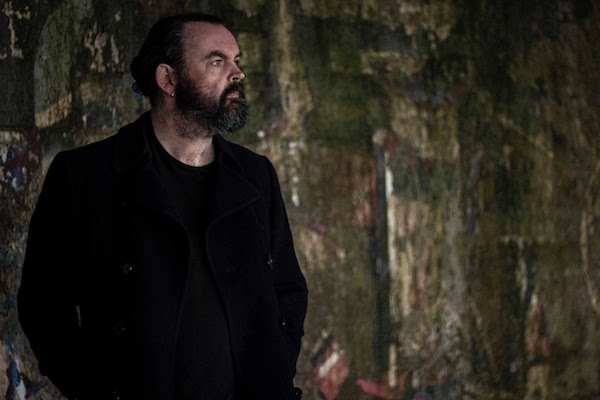
Even fans of Scandinavian underground music may have missed one of this year’s overlooked gems, Still Quiet (Voices of Wonder), a transfixing and truly original work of experimental erudition that vacillates between post-metal and post-rock while lacing the pacifying musical passages with male and female vocals.
The release came out a few months back courtesy of The Soundbyte, a more adventurous project led by Trond Engum. The guitarist and composer is better known for his more popular band The Third and the Mortal, which activated last year following a 19-year break, much to the delight of rock fans titillated by forays into melodic doom metal, darkwave, atmospheric alternative-rock and even trip-hop.
The Soundbyte is arguably even more daring in its compositional capacities, and Engum’s project hasn’t paused since he incepted it in 1998. If this all sounds like a lot to digest, join us as we delve into the mind of one of Norway’s most cherished musicians, and take a gander at some Still Quiet selections along the way, in The Bad Penny‘s most extensive interview of 2025 thus far.
“You can’t rest. My strategy is to constantly work, because I know if I work hard every day, something will come out of it.”
-Trond Engum
How’s your day going, Trond?
It’s good. It’s eight o’clock in the evening at my place, so it’s still quite light here. I’m in Trondheim, which is in the middle of Norway … and really small. [There are] about 50,000 people here, and [it takes] a lot of driving to get anywhere. It’s about 300 kilometers from the Polar Circle.
Are you very involved in your immediate community as well, whether it be through music or as a public citizen or getting involved with civic affairs?
I’m taking care of the environment I live in, so I’m helping out in the community here with whatever I can do in a way. That gives me a lot of joy, to be able to help other people and share some laughs with different people from different backgrounds, different views and everything. I learn a lot about that, to be part of a community and learn from other people that have different views than yourself. It’s a good thing. You find a diversity of opinions when you encounter people. [You find that] all over the world but in a small city as well. It’s calm here. Still and safe. It’s a nice community to live in, and it’s a good community to raise children. It’s a good place to be and to live.
What do you most enjoy about your environs?
It’s really quiet here. I live in a thousand-year-old city named Trondheim, so its inhabitants have been here for a lot of years. There’s a lot of culture. It’s like living in a village but still in a town, in a way. The music scene is quite enjoyable. I like the quiet. I like to travel and explore busy places as well, but it’s a nice place to live. Children, environment, woods, nature, everything.
When you go into nature, are you surrounded mostly by woods and forest or glaciers?
There’s some hills, and the fjord is outside. I have a bit of everything. I have some fjords, I have some mountains. If I go by car, it’s possible to go to different places, of course.
Is part of the reason you started The Soundbyte in the early ’90s because you wanted to be able to travel?
Definitely. We had a lot of inspirations. I was lucky to have some of my childhood friends [in the band, and] I still play together with them. We wanted to do [The Soundbyte] and try to explore the world together and see what it was like. That dream came true in many ways because of the music. The criteria for success for us has always been, of course, the curiosity for music, which is still there, but also being able to travel and meet other people and to cooperate with other people.
What was your first exposure to music? Was it through record stores, friends, tape trading?
It started before the internet, when you didn’t get many records and you got something which sounded really different from what you heard on the radio. This is what I want to do, in a way: [Make music that] moves me, that speaks to me in another way than what is generic and what is played for the general public.
[I also discovered new music] from older friends, older brothers and sisters, and then, of course, record stores. [I’d hang] around [them,] get familiar with the owner, be aware of what was coming in and get suggestions. You’d spend all your money on records, and then you were broke at the beginning of the month, and then you’d speak with the owner, asking if he’d at least listen [to music we didn’t know, to see if we’d like it]. Then we’d save [our money and buy it when we could]. Quite early on, metal and harder music was the start for me.
What started with the band was making something different than what we heard on the radio and that no one was doing in Trondheim. That was the direction we wanted to go in.
What was the first record that really blew your mind?
I’m taking a stab in the dark here, but something like King Diamond. It was like, “Whoa, there’s a whole other universe.” Actually, I remember that first time when [I got] the goosebumps, the first experience I [felt] that from music. I heard a lot of music from the ’60s and ’70s first because of what other people brought. But the first time I heard Rainbow, this song on the album called Rising [1976], the “Stargazer” song. It’s a long melodic minor build with Ronnie James Dio [on vocals] and Ritchie Blackmore [on] guitar.
I heard his really long guitar solo – not the shredding part, but building a composition around it, with the organs and the full, collective compositional force. It [was] something I hadn’t heard before, even [though] it had been out for 10 years already when I heard it. I finally found something that really resonated with the melodies: the melancholy in the band.
So when you started playing music, did you model your sound after that dynamic? Or did you just do your own thing?
We started playing in The Third and the Mortal when we were quite young [1992]. I was 13 years [old] at the time. Me and Rune [Hoemsnes] – who’s playing drums on Still Quiet as well – were not able to play what we heard. We could strive to try to do Metallica or Slayer or the things that we heard, but it was really hard to find something that we actually could play at the time. So we needed to rehearse and rehearse and rehearse.
Because of that, we started very early to jam around so we could figure it out ourselves. Then we started to compose and make our own music quite early when we started playing. Of course, it was very inspired by some of the music we heard. Gradually we worked from there. We rehearsed almost every day for so many years. We’d go to school, go home, get the guitar going, meet and then just play together.
This was when you were still a teenager?
Yeah, [from] 13 until 17. [Hoemsnes] is a couple of years older than me and the rest of the band as well. They finished school before going to university just to play music, and I was still in college. I told my father that when I was 17, “OK, I’m going out touring with my friends. No engineering, no university. I need to do this.”
That was really nice. I remember us packing all the equipment in the van and [leaving] Trondheim together with my friends. I saw all my other friends going to school in the rain, and I was leaving. Those were some good years. But, of course, when I turned in my 20s, the friends I’d seen going in the rain to school started to get jobs – and we were still touring in the van. And I thought, “I need to step up a bit. If I’m going to do this, I need to do it properly.”
So did you wind up getting a job?
I’ve been so lucky to work in music all the way. I’m really lucky.
That’s phenomenal. Did you teach yourself production engineering and other skills, attend classes or was it just by virtue of the success you gained being in bands?
When we started touring, eventually we got some success with The Third and the Mortal (previously named The 3rd and the Mortal). We started touring a lot and sold some records. We got on the last train in the record industry with physical formats, so we actually were lucky to sell some copies and make a living off that for some years. That was from ’93 until ’97, ’98. It was the only project and full-time occupation for the whole band at that time. [We didn’t make] a lot of money. Still, we were able to just do that one thing, which was great.
Studio technology and all those other things came later. When I found out that I needed to do something in order to be able to do music all the time, I started studying music technology. I’m employed at university now in music technology. Half my job is to play and explore music, and half my job is to teach. It’s practical. We work with composition for films and studio technologies
Do your students think you’re a badass?
[They probably did] in the first years. Now, no one knows who I am. They are in their mid-’20s, so they listen to other music. It’s a really good environment for me to be in because [I’m] always pushed to listen to new things and to do something [new]. You can’t rest. You always need to go for it, which gives me a lot of energy and motivation, of course.
You seem like an individual who probably always challenges yourself creatively, I would imagine.
Yeah.
I’d be remiss if I didn’t mention that I absolutely love what you’re doing – not to make your head so big that I can’t see you in the Zoom anymore. What does the term “post” mean to you? The term seems open-ended enough that you can make what you want out of it, but at the same time, it implies a sense of deconstruction or flipping tradition on its head. Do you like having that word associated with your music? You’re also a fan of Rainbow. I know prog comes in and out of vogue, but especially ’70s prog has a dated sound. I don’t find that with post-metal or post-rock. It seems to have a more timeless quality to it.
I don’t know how to explain it, but when you start [making music] and find something, you are – all of a sudden – turned and never alone. You’re always in a context. But you’re not aware of that when you start. It’s not the way you think. You don’t try to sound like one [band] or another. And I think some bands are lucky to be able to drive in that track for their whole career. And then, even though they didn’t start up as a “post-rock” or a “post-metal” act, they have been part of it, and all of a sudden, it catches them. If you’re doing your own thing for so many years and always trying to progress and trying out new things, you can’t run away from yourself.
For example, if you take something and abstract some of the things that you have done earlier and then put them into new contexts, like [a] postmodern [sound], and you put it together, there’s still some sort of direction which has been there from the start. The tonality or the rhythm or something is kept, something is left, and then you are experimenting and then you leave a lot behind. What can I bring with me further to what I’m going to do next? And how do we challenge ourselves in order to try to motivate ourselves to try to achieve something that we haven’t heard yet – which is [more] about curiosity and than wanting success. I enjoy the bands that you can hear that it’s the same band 20 years ago, but the context around it and the wrapping and maybe instrumentation and everything has changed over the years.
Their signature sound.
Yeah, right. The seed or the essence of it.
As somebody like yourself who has had the privilege of being able to put your whole life into music, what is it that you wanted to pursue with the latest Soundbyte record that piqued your curiosity, and how did you go about doing that?
This album has been really, really hard to make. It’s been going on for several years because I wasn’t satisfied. When I do a new record with The Soundbyte, I try to change and find something new in a way – probably not for everyone, but for at least for myself, that I can challenge myself to find something new. So a lot of the songs that are on this album have been through so many iterations, have been played live …
Some of the themes have been in other compositions, some has been freer and that also worked a lot with free improvisation in the last 10, 15 years. I don’t think the music I did in the free improvisation was great; it’s probably more fun for the musicians than the audience. But still, you can extract something from there in the sonic expression and the energy, which I couldn’t achieve with the normal setup if I was going to make a more traditional rock album, where you’ve got all these rules, context and history. I can’t run from that in a way, so trying to wrap [Still Life] in something else helped me navigate in another way in it. It was really difficult for me to make this album. There were no shortcuts.
Is it fair to say that you shifted away from a blues-based type of rock to more of a jazz-based type of rock?
In the sense of how you frame it maybe, but it’s probably more about the sonic wrapping around it. The way you use sound and how you put different sounds together. And also trying to work with other instruments, which I haven’t worked with before, which takes a lot of room. For instance, I used a lot of church organ, which sonically takes a lot of space. And then you need to [figure out] what to do with the rest. How do you work with this enormous room in a way that tries to overpower you? And you still need to have your own meaning inside there in a way, if that makes sense.
Did you go to the chapel that you can see from out your window?
I’m not allowed to go there, but we have access to it. That would be great. Next time, maybe.
Did you deliberately choose instruments that you hadn’t played before as a way to test yourself and force yourself to go into new territories?
Yeah. I try out new sounds and environments that I work a lot with. Electric guitar is my main instrument. But I work a lot with technology too, to try to mold something around the guitar sound in the way. And using only real-time technology is part of the playing. I don’t use loops or samples though. I worked a lot with building the guitar system. I’ve been lucky enough to work with a lot of great musicians, which also gives a lot of resistance back and forth. Also, we did a lot of the recording with me and [Hoemsnes] live, instead of doing everything layer by layer.
That’s why it’s also taken a lot of time to try it out in different contexts, like live. What is functioning? What is not? Is it the right tempo? Is it the right key? I’m pushing in different directions and putting it in [some] contexts with all this noise and seeing how it resonates within this new room. And then, all of a sudden, it starts to get direction on its own. Then I just need to hold on to it and try [not] to force it into one or another direction.
Do you find that you can identify that in people’s playing what they themselves can’t see, because you’re like an orchestrator or conductor in a way?
I think it’s probably more [that] I’m worried [about] collaboration, so it’s more like a dialogue. When I’m lucky to work with great people, when they do their thing without me telling them, we always start with what we hear, and when they do something musically on top of what I present to them, that’s their perspective of how they hear it. I ask, “Am I giving you the right message here musically, or are we communicating?” And then it’s a dialogue, and then everything can change.
Even though I provide the ideas, the composition is quite collective when I work, and flexible when I work with the people I work with.
Which of course makes everybody feel like they’re part of the experience and not just being dictated to, right?
Yeah. It’s good, although I also think it’s important when you are going to do something that you really [believe in] that you have some sort of ownership [of it].
So, in the credits of your records, do you list everybody as the songwriters or list yourself as the sole writer?
I usually put myself as a writer. I always have ideas for melodies and such, so it’s more about the phrasing or the words. But sometimes when we create [music] together, we change direction and create it together. So that’s the way I did it, at least for [Still Life].
As I’ve gotten older, I sometimes find when I encounter strangers in the world, whether it’s through travel or a neighbor I’ve never spoken with before, I don’t think of myself as much of a unique person as I thought I was when I was a kid. Have you ever encountered someone who’s a musician who you feel operates or thinks really on the same wavelength that you do?
I meet those people from time to time. Most of them are quite modest, so it takes some time. When they’re modest and they listen, and I listen, then you know, “OK, if you are actually listening to what is going on here, I have respect for what you’re going to say.” Of course, it starts with the reference, “Which music do you like?” and things like that. But when we start to work together, I always hear it in the dialogue when we start making music together, if it works or not. Then it’s his or her track in a way, which is fine. In collaboration, you need to give or take in a different way.
I have not been able to make albums sound like they are if I haven’t collaborated with people. Some musicians, we have been working together for so many years, they’re like family. So we can communicate and understand, and we have a history. It’s like a preternatural language almost, like a language that’s not through words.
When you look over your career, what was the period where you hit the hardest writer’s block, or where you felt creatively like you were hitting a wall, and how did you pull yourself out of it?
That’s a good question. It happens from time to time. All the time, actually. For me, it’s when I lose the [ability to] surprise myself, that I can do something new. When I was starting at university, everything needs to be contextualized in a way, and you know you are not alone, and then you need to compare. Because if you just play, you are going in a [certain] direction, you have this internal community with fellows, that you’re going in the same direction, but all of a sudden you are in the context where the music history is knocking at the door. So is what you’re doing meaningful? In that context, probably not. But it’s meaningful for me.
When you meet [with collaborators], you need to relate to, “What is this similar to? What is this different to? How does it compare? Where does it belong? What culture is it? What have you stolen?” The different small things within the different genres, which have rules. “What are the rules, and am I allowed to do that?” No, you’re not, if you’re going to play for that audience. So, all of a sudden, even though it opens the world, at the same time it limits it in a way as well. And when you take in that, like a small man in a big context, you don’t even dare to play a note. “What can I do within all these things?” And then I just needed to go into depth and try to learn new things and techniques, which is really not part of my expression. I don’t enjoy studying a lot of electro-acoustic music, but I still listen to it.
It’s really sound-based, you know. [Karlheinz] Stockhausen and all that, but also newer things. These are composed pieces, but is it possible to do some of these techniques real-time in the band and try to explore that, and what can that bring to the table? A lot of trying and failure, and just bouncing at the wall for several years without any great results. My strategy is to constantly work, because I know if I work hard every day, something will come out of it. The result may not be as I wanted, but at least I’m doing something, and if just 1 percent of it I can use later, it’s good, there’s some learning in there. The other strategy is always to meet new people, play with new people, especially if they do music that I haven’t played. I learn a lot from that, and that gives a lot of inspiration as well. I’ve explored a lot which I haven’t used for everything, but at least you can abstract some of the knowledge that you get there, and take it back, and try to mold it into where you’re going, if that makes sense.
That does. You are a very modest person, I can tell, because my interpretation of what you’re driving at is that you have faith in yourself as an artist, that you know deep inside that you are a creative person, and that you just ride it out. If you put in the work and take the time, it’ll emerge. When you’re in a spot, like a point of frustration where you want to be doing something more than you’re able to do, do you resort to modern innovation and technological innovation? To what extent is that a common occurrence? Is that something that you are wary of, or do you embrace it fully, or somewhere in between?
I embrace technology fully. But my way into it is that it’s always the music that should develop the technology and not vice versa. So I come in with my music and my guitar, that’s where I’m grounded. When I meet new technology, that’s a reference point for me. When I try new technology, what is this able to bring, and what does it take away? And then there’s a negotiation, and then the negotiation. There’s no right or wrong with this.
But for me, it’s really important that technology also, as my instrument, needs to be a real-time thing. It needs to be dangerous. You need to work for it. I don’t like to have some samples going on, and loops, or doing a loop pedal, things like that. Not because it’s wrong, but it’s [too] safe. If you have the first loop, and then it comes again, it’s 100 percent predictable. And then, as an ensemble, you’re locked inside. Everyone knows we are going in that direction, and then it’s really hard to come out. Of course, it gives a fulfillment, because now we have established where we are going, and everyone’s like, “Yeah, this is a nice place to be.” But then it’s a safe place as well.
That’s why I try to embrace technology that changes things and does unwanted things. So when I’m playing guitar, I use adaptive techniques, so that depending how I play, it changes the sound on the drums, for instance. Or all the drums played changes the sound of my guitar. Things like that. Instead of using controller signals and pedal boards, the way you play it actually, by using audio descriptors, you can analyze the signal going in real time, and then you can change parameters in the technology too. And it can change the way our musical interaction is, which I think is fascinating in many ways. I don’t want to say that you keep it under your control entirely, because you’re exploring new things, but you don’t let it take over your art.
It’s a very good point that you make, about having control and giving away control.
Yeah. And negotiation. When you do real-time systems, it’s not possible to re-create it 100 percent like an instrument. That means that you’re not totally in control, but you recognize musical situations more than you recognize a sound or you recognize a theme. Whereas when you recognize musical situations, we’re in at the same time. And if you work a lot with it, you have a notion you have been there before. So, in some way, it’s possible to navigate within it, even though it’s mentally quite hard to grasp what is going on. But at the same time, when you do it a lot, you can start to play and in the flow, if that makes sense.
Can you identify a situation where you felt you were getting repetitive and wanted to break out of that?
It could be repetitive, or it could be that if it goes to a crescendo … for instance, when you’re playing, if the tempo goes down, for instance, like a rubato or something, you could actually go in and change it, because it changed the sound as well. And then you can work with it, or you can work against it. It’s your experience and wisdom that allows you to identify those moments where you say, “That’s something.” Probably not wisdom … it’s more about the experience [you gain] when you play with a drummer [like Hoemsnes] for many years.
I’ve heard the word “trappings” referring usually to material objects or tools that you can use and implement. But the way you describe it, now I understand that the word means that you can get trapped by them. Very fascinating, really cool. Is there any chance I’ll ever be able to see you perform live?
I’m not touring with The Soundbyte at the moment but with my old band, The Third and the Mortal. We are going to Mexico and South America in September. You should invite me to Idaho. Have you been to South America before?
Yeah.
Maybe I’ll see you there. Like yourself, as long as you stay hungry and you’re open to new ideas, and you have an interest in learning more, then you probably won’t become cynical.
Unfortunately, we haven’t talked in this conversation about what horrors are going on in the world right now, most coming from my country. Kind of a relief we didn’t have to go there.
It’s in Europe as well, which is really not good. The lyrics on [Still Life are] a lot about that as well.
It’s hard to see the light at the end of the tunnel, as they say, but that’s why artists are so, so important. Again, I salute you for making an incredible record, and I’m still just scratching its surface. But I love it. And I love what you’re doing. I really value your time, honesty and transparency, Trond. Thanks for being such a great conversationalist.
Thank you very much. And likewise. I hope that all interviews could be like this, you know. I appreciate that.
For more info on The Soundbyte, and to buy their albums, head to their Bandcamp page. For more info on The Third and the Mortal, and to buy their albums, head to their Bandcamp page.
 The Bad Penny (beta)
Leave a comment